
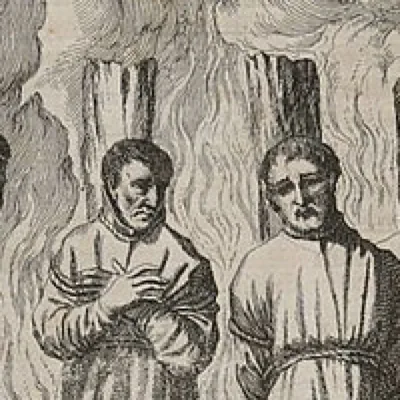
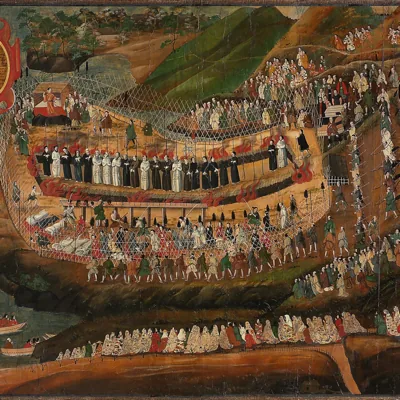
Fifty-five Christians, priests and religious of three orders, catechists, mothers of families and children, put to death on the hill of Nishizaka: the greatest collective martyrdom in the history of Japan.
After the affair of the Hirayama ship, the shogunate ordered an end to the imprisoned missionaries and the Christians who had sheltered them. On 10 September 1622, the prisoners of Suzuta, at Ōmura, and those of Nagasaki were led to the hill of Nishizaka, where the twenty-six martyrs had been crucified. Twenty-five of them, the religious and those who had lodged them, were burned over a slow fire; the others, among them many women and children, were beheaded before their eyes.
Among them were the Jesuits Charles Spinola and Sebastian Kimura, the first Japanese priest; the Dominicans Francis Morales, Angelo Orsucci, Alphonsus de Mena, Hyacinth Orfanell and Joseph of Saint Hyacinth; the Franciscans Richard of Saint Anne, Peter of Avila and Vincent of Saint Joseph; Lucy de Freitas, in her eighties; Isabel Fernandez and her son Ignatius, aged four; the Sanga, Hamanomachi, Nagaishi, Tanaka and Yamada families. Three young men, Gaspar Koteda, Francis Takeya and Peter Kawano, were beheaded the next day. A Japanese witness made a painting of it, completed at Macao and kept at the Gesù in Rome. They were beatified in 1867.
Celebrated on the same day
Blessed Isabel Fernandez
Widow of Domingos Jorge, martyr with her son Ignatius
Blessed Lucy de Freitas
Japanese widow, Franciscan tertiary, burned alive at eighty
Blessed 205 Martyrs of Japan
Martyrs of the Tokugawa persecution (1617–1632)
Blessed Alphonsus de Mena and Joseph of Saint Hyacinth
Spanish Dominicans, martyrs of Nagasaki
Blessed Angelo Orsucci
Dominican of Lucca, martyr of Nagasaki
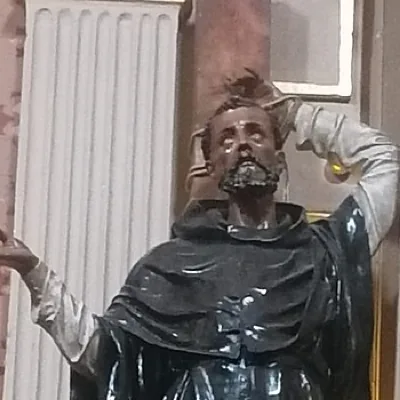
Blessed Bartolomé Gutiérrez and Companions
Martyrs of the springs of Unzen, burned at Nagasaki (1632)
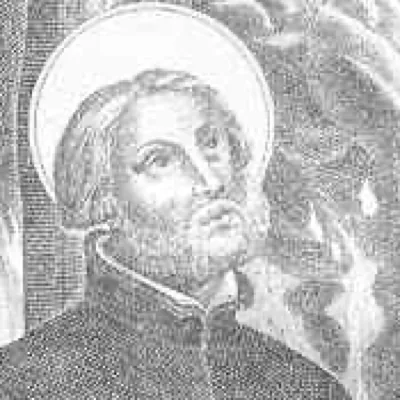
Blessed Charles Spinola
Jesuit, martyr of the great martyrdom of Nagasaki
Blessed Dominic Castellet and his Companions
Dominican and Franciscan martyrs of Nagasaki (1628)
Blessed Francis Gálvez
Discalced Franciscan, martyr of the great martyrdom of Edo
Blessed Francis Morales
Dominican, founder of the Dominican mission of Japan
Blessed Francis Pacheco and Companions
Jesuit martyrs of Nagasaki (1626)
Blessed Hyacinth Orfanell
Dominican, historian of the Japanese Church
Blessed Louis Sasada
Japanese Franciscan priest, son of a martyr, companion of Louis Sotelo
Blessed Louis Sotelo
Franciscan, organiser of the embassy of Date Masamune to Europe, martyr
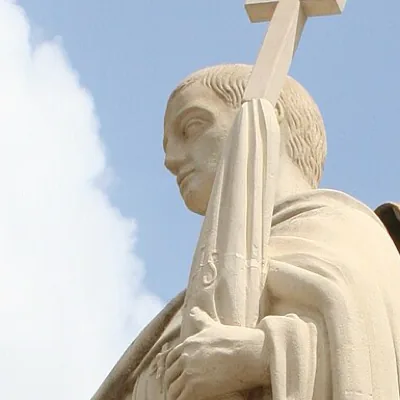
Blessed Peter of Ávila and Vincent of Saint Joseph
Discalced Franciscans, priest and brother, martyrs of Nagasaki
Blessed Richard of Saint Anne
Recollect Franciscan from Hainaut, martyr of Nagasaki
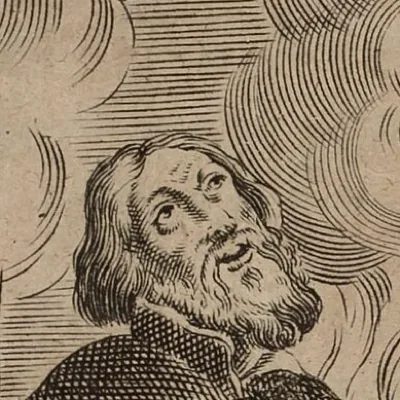
Blessed Sebastian Kimura
Jesuit, first Japanese priest
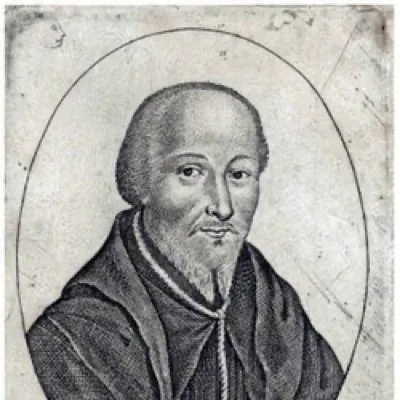
Saint Ambrose Barlow
Benedictine monk, martyr of Lancashire
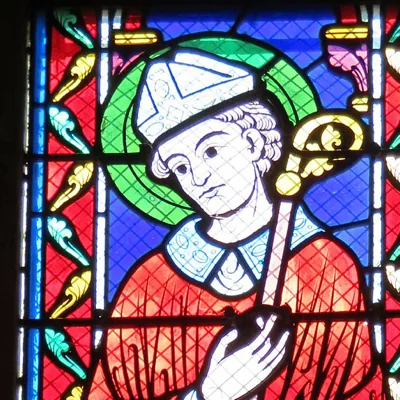
Saint Aubert of Avranches
Founder of Mont-Saint-Michel
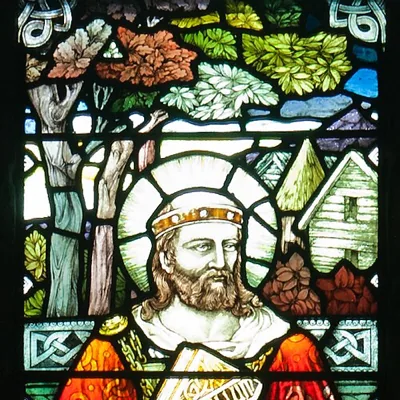
Saint Finnian of Movilla
Abbot of Movilla
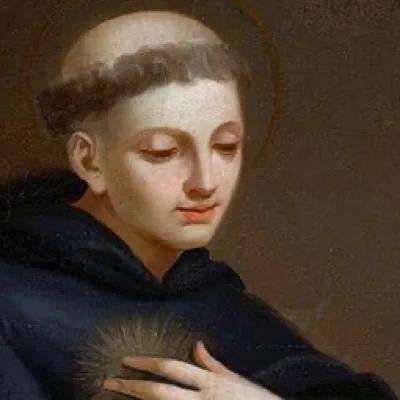
Saint Nicholas of Tolentino
Hermit of Saint Augustine, friend of the souls in purgatory
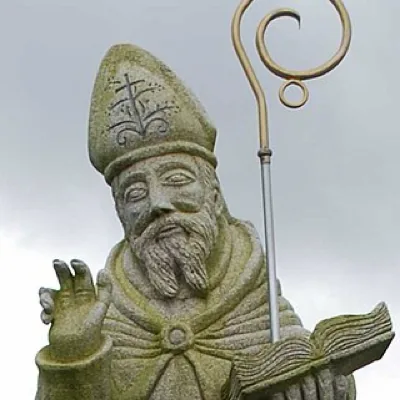
Saint Peter of Mezonzo
Bishop of Compostela
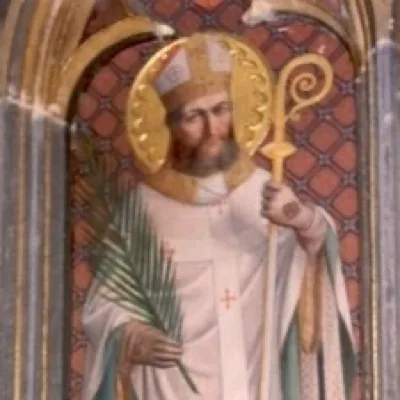
Saint Theodard of Maastricht
Bishop of Tongeren-Maastricht, martyr
Saint Pulcheria
Empress
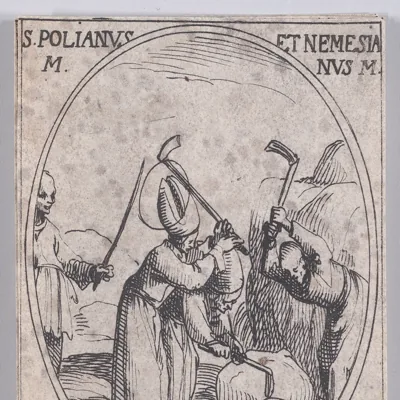
Saints Nemesian and Companions
Confessor bishops condemned to the mines
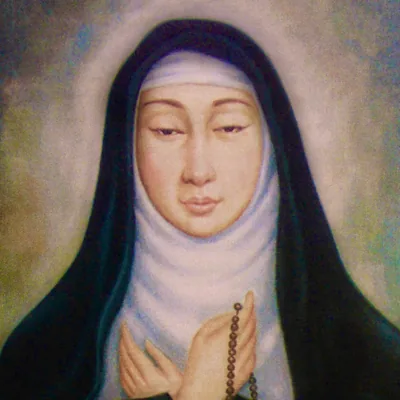
Venerable Ignacia del Espíritu Santo
Foundress of the first congregation of Filipino religious women