
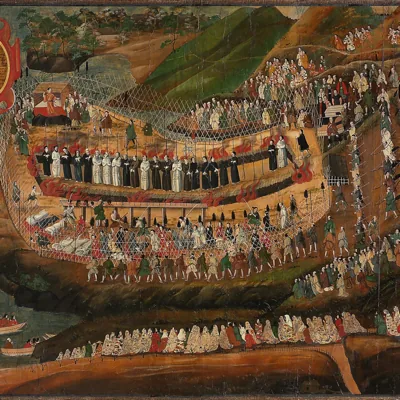
Jesuits, Franciscans, Dominicans, Augustinians and above all Japanese laypeople, whole families with their children, put to death from 1617 to 1632, beatified together by Pius IX in 1867.
After the edict of expulsion of 1614, the Tokugawa shogunate hunted down the missionaries who had remained in hiding and those who sheltered them. From 1617 to 1632 hundreds of Christians were beheaded, burned slowly, exposed to the cold or plunged into the boiling springs of Unzen. The great martyrdom of Nagasaki of 10 September 1622, in which Charles Spinola and some fifty faithful died, the great martyrdom of Edo of 4 December 1623 and the pyres of Nagasaki from 1626 to 1628 are the best-known episodes; the last of the group were burned at Nishizaka on 3 September 1632.
The processes opened in the seventeenth century at Manila and Macao enabled Pius IX to beatify in 1867 two hundred and five of these martyrs: European and Japanese priests, religious, catechists, members of confraternities and third orders, men, women and children, among them several Koreans. The Church in Japan celebrates them on 10 September, the anniversary of the great martyrdom of Nagasaki.
Celebrated on the same day
Blessed Isabel Fernandez
Widow of Domingos Jorge, martyr with her son Ignatius
Blessed Lucy de Freitas
Japanese widow, Franciscan tertiary, burned alive at eighty
Blessed Alphonsus de Mena and Joseph of Saint Hyacinth
Spanish Dominicans, martyrs of Nagasaki
Blessed Angelo Orsucci
Dominican of Lucca, martyr of Nagasaki
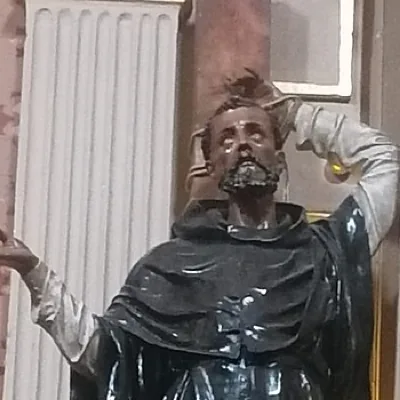
Blessed Bartolomé Gutiérrez and Companions
Martyrs of the springs of Unzen, burned at Nagasaki (1632)
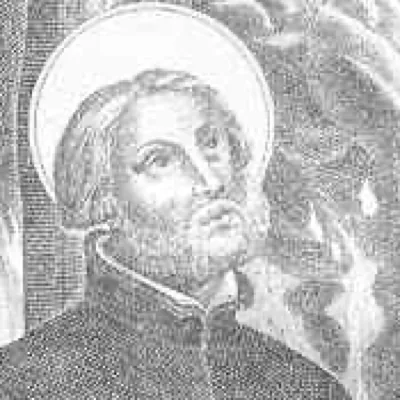
Blessed Charles Spinola
Jesuit, martyr of the great martyrdom of Nagasaki
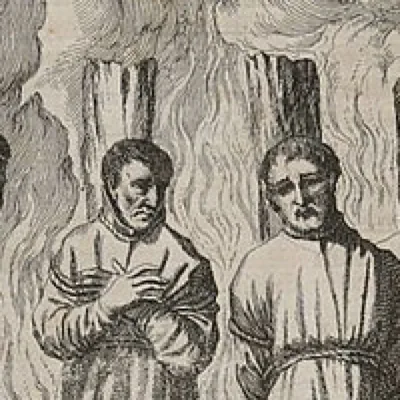
Blessed Charles Spinola and Companions
The Great Martyrdom of Nagasaki (10 September 1622)
Blessed Dominic Castellet and his Companions
Dominican and Franciscan martyrs of Nagasaki (1628)
Blessed Francis Gálvez
Discalced Franciscan, martyr of the great martyrdom of Edo
Blessed Francis Morales
Dominican, founder of the Dominican mission of Japan
Blessed Francis Pacheco and Companions
Jesuit martyrs of Nagasaki (1626)
Blessed Hyacinth Orfanell
Dominican, historian of the Japanese Church
Blessed Louis Sasada
Japanese Franciscan priest, son of a martyr, companion of Louis Sotelo
Blessed Louis Sotelo
Franciscan, organiser of the embassy of Date Masamune to Europe, martyr
Blessed Peter of Ávila and Vincent of Saint Joseph
Discalced Franciscans, priest and brother, martyrs of Nagasaki
Blessed Richard of Saint Anne
Recollect Franciscan from Hainaut, martyr of Nagasaki
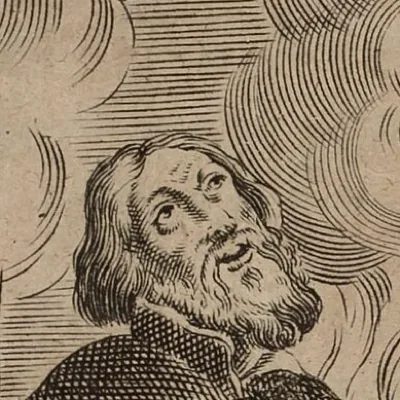
Blessed Sebastian Kimura
Jesuit, first Japanese priest
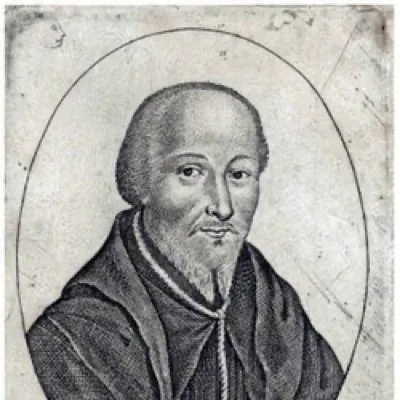
Saint Ambrose Barlow
Benedictine monk, martyr of Lancashire
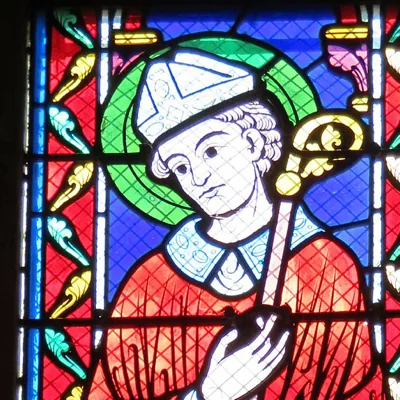
Saint Aubert of Avranches
Founder of Mont-Saint-Michel
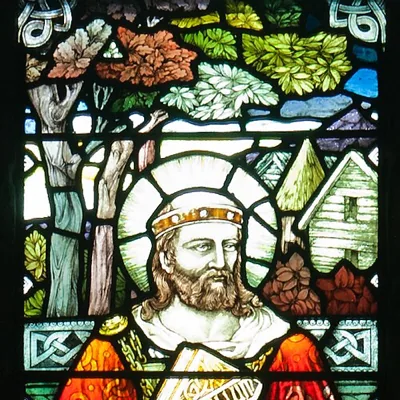
Saint Finnian of Movilla
Abbot of Movilla
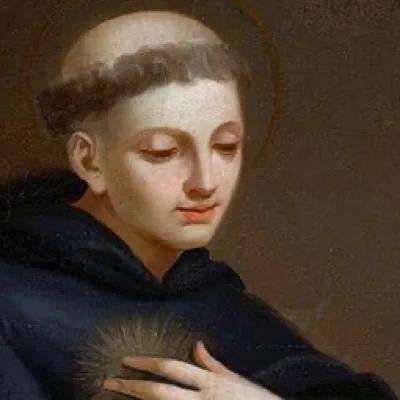
Saint Nicholas of Tolentino
Hermit of Saint Augustine, friend of the souls in purgatory
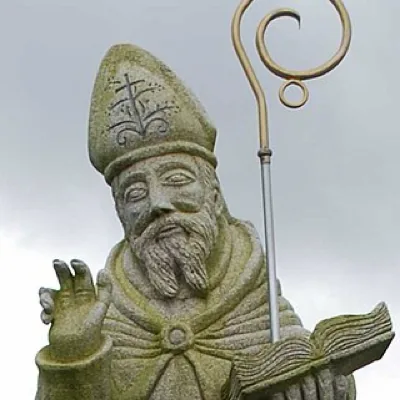
Saint Peter of Mezonzo
Bishop of Compostela
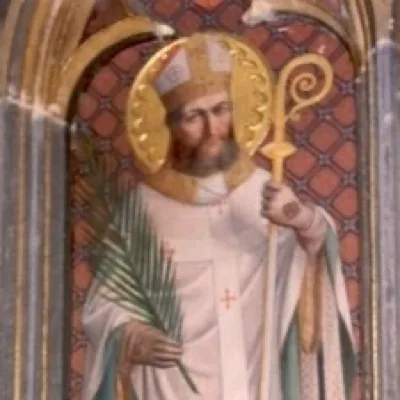
Saint Theodard of Maastricht
Bishop of Tongeren-Maastricht, martyr
Saint Pulcheria
Empress
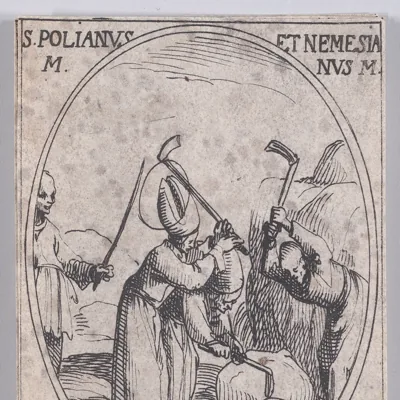
Saints Nemesian and Companions
Confessor bishops condemned to the mines
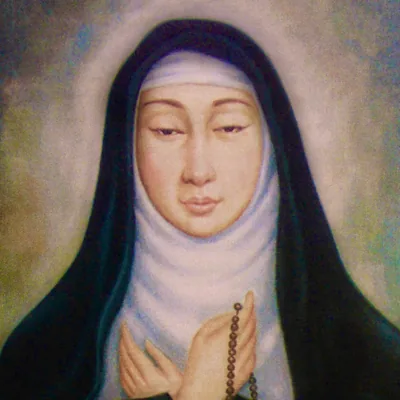
Venerable Ignacia del Espíritu Santo
Foundress of the first congregation of Filipino religious women