
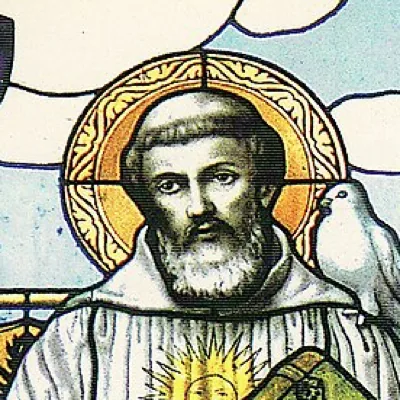
An Irish monk who came to the Continent around 590, he founded Annegray, Luxeuil and Fontaine, whose austere rule marked the whole of Gaul, and then, exiled by Brunhilda, died at Bobbio in Italy.
Born around 543 in Leinster, Ireland, Columbanus was trained at the abbey of Bangor under Abbot Comgall. Around 590 he left Ireland with twelve companions, among them Gall, landed in Brittany and made his way to Burgundy. King Guntram gave him an old Roman fort at Annegray, in the Vosges; disciples flocked to him and he founded Luxeuil, then Fontaine. There he imposed a short and very austere rule and private penance, with confession to a priest, which then spread throughout the Latin Church.
His Irish customs, notably the calculation of the date of Easter, set him against the Frankish bishops; he appealed by letter to Pope Gregory the Great. Having reproached King Theuderic II for living with concubines, he drew upon himself the hatred of Queen Brunhilda, the king’s grandmother: in 610 he was arrested and taken to Nantes to be sent back to Ireland. A storm brought the ship back to shore; welcomed by Clotaire II and then by Theudebert II, he evangelised with Gall the Alemanni around Bregenz, on Lake Constance.
In 612 he crossed the Alps and reached Milan, where the Lombard king Agilulf and Queen Theodelinda welcomed him. In 614 he founded the abbey of Bobbio, in the Apennines, and died there on 21 November 615; he was buried there. His Life, written around 640 by Jonas of Bobbio, and his letters make him known. Luxeuil, entrusted to Saint Eustace, became for two centuries a great monastic centre from which came many bishops and founders; Benedict XVI presented him as a ‘European saint’.
We Irish, dwelling at the ends of the earth, are all disciples of Saints Peter and Paul and of all the disciples who wrote down the divine canon under the inspiration of the Holy Spirit.
Celebrated on the same day
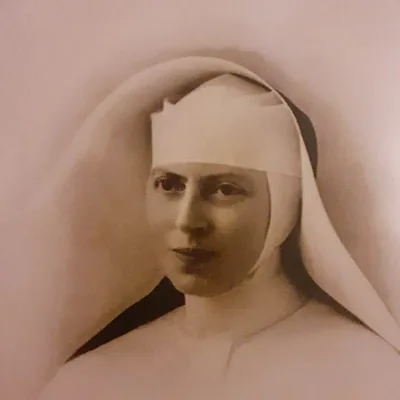
Blessed Enrichetta Alfieri
The "Angel of San Vittore"
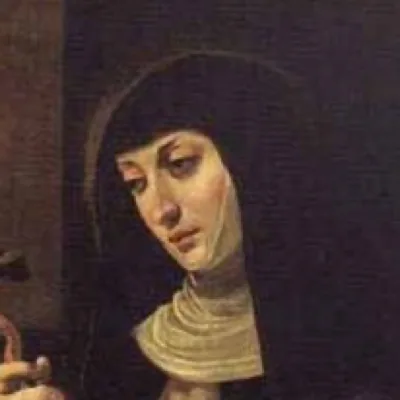
Blessed Margaret of Savoy
Marchioness of Montferrat, Dominican at Alba
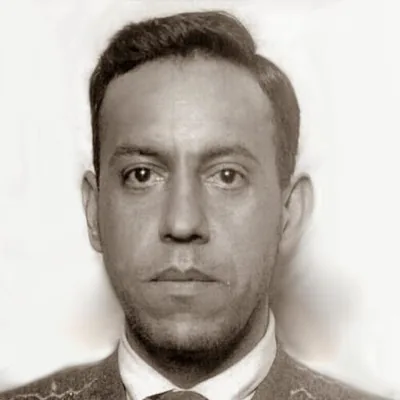
Blessed Miguel Agustín Pro
The clandestine Jesuit of Mexico City
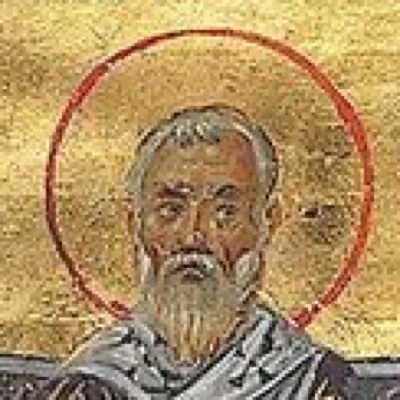
Saint Amphilochius of Iconium
Bishop of Iconium
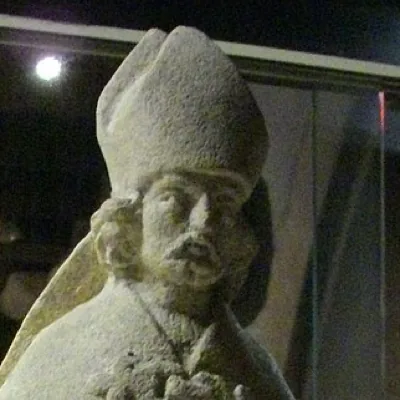
Saint Clement of Metz
First Bishop of Metz
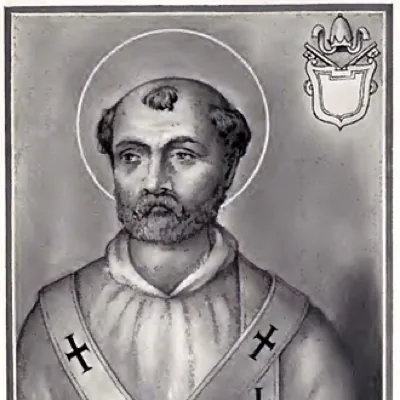
Saint Clement I
Pope and martyr, author of the Letter to the Corinthians
Saint Gregory of Agrigento
Bishop of Agrigento, commentator on Ecclesiastes
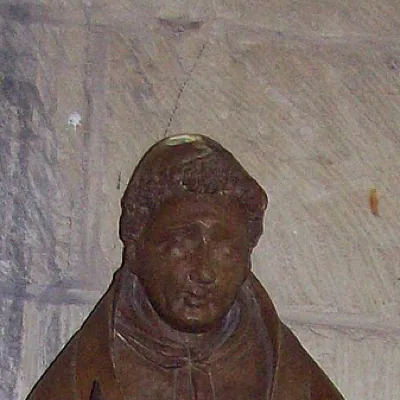
Saint Trudo
Priest, founder of Sint-Truiden, apostle of Hesbaye
Venerable Pelágio Sauter
Padre Pelágio, missionary of Goiás
In the same region
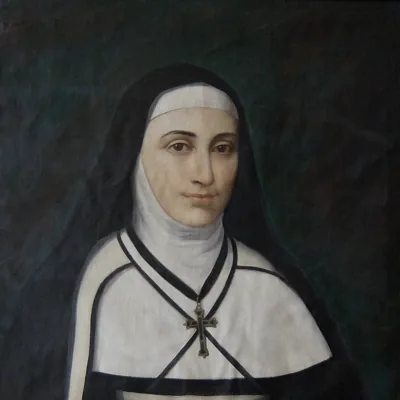
Blessed Adèle de Batz de Trenquelléon
Foundress of the Daughters of Mary Immaculate
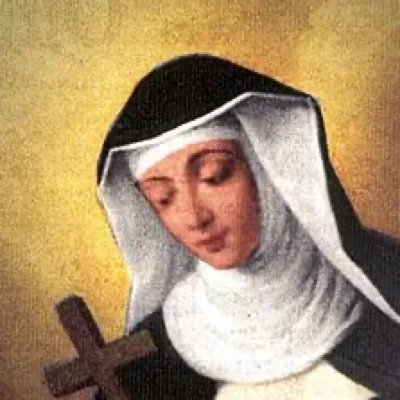
Blessed Agnes of Langeac
Dominican mystic of the Velay
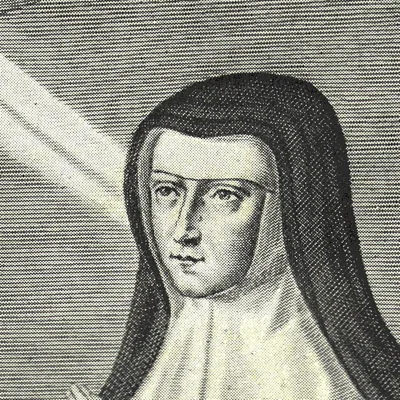
Blessed Alix Le Clerc
Foundress of the Congregation of Notre Dame