
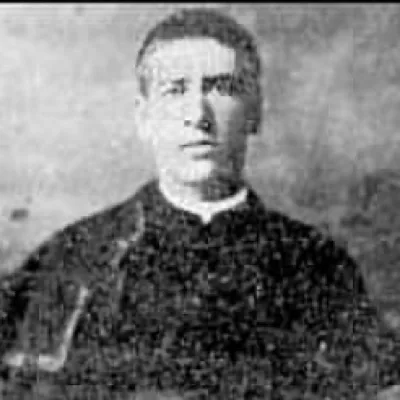
A young parish priest of Tequila shot in his sleep in 1928; his shrine in the Altos de Jalisco draws migrants, who invoke him on the road to the United States.
Born on 16 April 1900 at Santa Ana de Guadalupe, a hamlet of the parish of Jalostotitlán in the Altos de Jalisco, the son of farmers, Toribio Romo González entered the auxiliary seminary of San Juan de los Lagos at eleven, supported by his sister María, then moved on to the seminary of Guadalajara. Ordained priest with a dispensation of age on 23 December 1922 by Archbishop Francisco Orozco y Jiménez, he served at Sayula, Tuxpan, Yahualica and Cuquío. He used to repeat: “Lord, do not let me go a single day of my life without saying Mass.”
Sent in 1927 as vicar in charge of the parish of Tequila, a region held by federal troops, he celebrated in secret in a former distillery and lived in hiding in a ravine, at the ranch of Agua Caliente, with his sister María and his young brother Román, also a priest. He spent the night of 24–25 February 1928 bringing the parish registers up to date and fell asleep at dawn. Soldiers and agrarian militiamen guided by an informer burst in: “That’s the priest, kill him!” Wounded by a first volley, he took a few steps before being shot in the back; his sister received him in her arms, crying “Long live Christ the King!”
His remains were brought back in 1948 to Santa Ana de Guadalupe, to the chapel he had had built. Beatified in 1992 and canonised by John Paul II on 21 May 2000, he became from the 1990s the object of popular devotion among Mexican migrants, who tell of having been guided across the border by a young priest with light eyes: his shrine at Santa Ana de Guadalupe welcomes crowds of pilgrims who come to ask his protection before departure or to thank him on their return.
Lord, do not let me go a single day of my life without saying Mass, without holding you close in communion.
Celebrated on the same day
Blessed María Ludovica De Angelis
The mother of the children's hospital of La Plata
Blessed Maria Adeodata Pisani
Benedictine, abbess of the monastery of Saint Peter at Mdina
Blessed Rani Maria Vattalil
Franciscan Clarist, martyr near Indore
Blessed Ciriaco María Sancha
Cardinal Archbishop of Toledo, Primate of Spain
Blessed Sebastian of Aparicio
God’s carter, Franciscan brother of Puebla
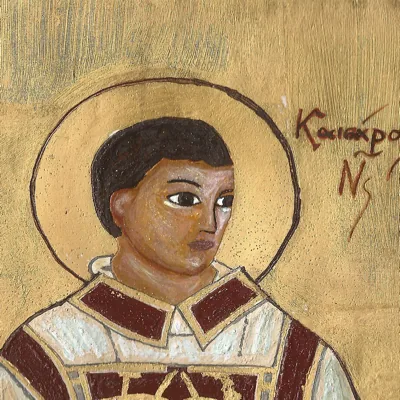
Saint Caesarius of Nazianzus
Physician
Saint Donatus of Zadar
Bishop of Zadar
Saint Gerland of Agrigento
Bishop of Agrigento
Saint Nestor of Magydus
Bishop and martyr
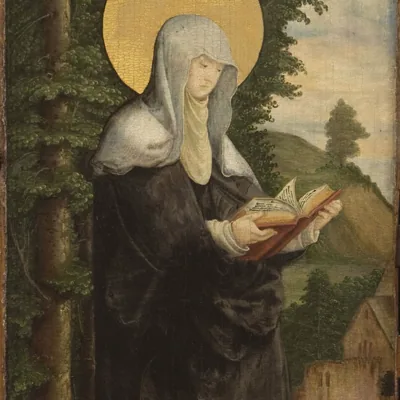
Saint Walburga
Abbess of Heidenheim
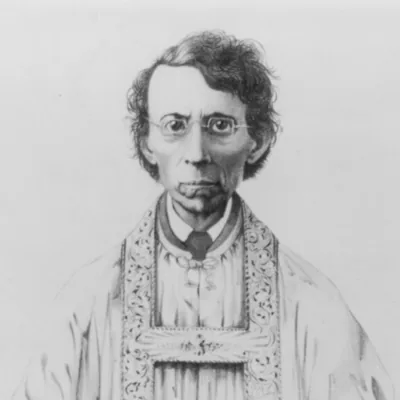
Venerable Félix Varela
Priest, philosopher and father of the Cuban conscience
In the same region
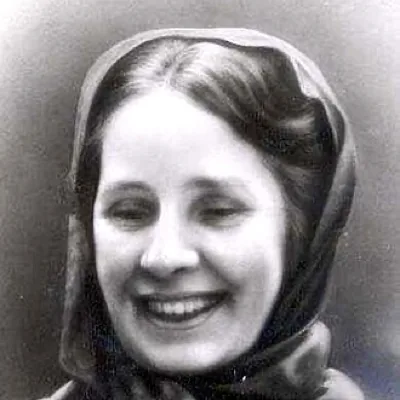
Blessed Concepción Cabrera de Armida
Conchita, mother of a family and mystic
Blessed Dina Bélanger
Pianist and mystic of Jesus and Mary
Blessed Émilie Tavernier-Gamelin
Foundress of the Sisters of Providence