
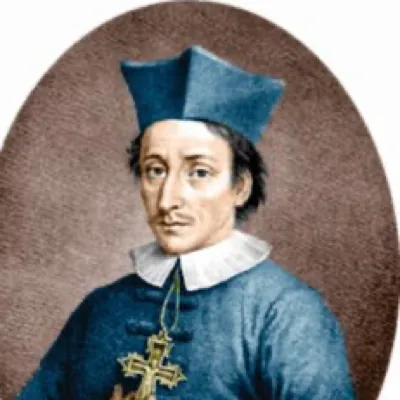
Nicolaus Steno
Blessed Nicolas Steno
Anatomist and geologist, missionary bishop of the North
A Danish scientist among the greatest of his century, discoverer of the parotid duct and father of stratigraphy, converted to Catholicism in Florence, he became a priest and then missionary bishop of Northern Europe and died in poverty at Schwerin.
Born in Copenhagen in 1638, the son of a Lutheran goldsmith, Niels Stensen (Nicolas Steno) studied medicine at Copenhagen, Amsterdam and Leiden. In 1660 he discovered the excretory duct of the parotid gland, which bears his name, showed that the heart is a muscle and studied the brain; at the court of the Medici in Florence, he recognised in the ‘tongue stones’ fossil shark teeth, and his De solido intra solidum (1669) laid down the principles of stratigraphy and modern geology.
In Florence, the piety of the Catholics he frequented and the study of the Fathers led him to convert, on 4 November 1667. After a stay as royal anatomist in Copenhagen, he gave up science: ordained priest in 1675, he was consecrated bishop in 1677 and appointed vicar apostolic of the Northern missions, at Hanover, then auxiliary bishop of Münster, and finally a missionary at Hamburg and Schwerin, living in extreme destitution.
Worn out, he died at Schwerin on 25 November 1686 (5 December in the Gregorian calendar). His body was brought back to Florence and buried in the basilica of San Lorenzo, near the Medici. John Paul II beatified him on 23 October 1988, hailing in him the union of science and faith.
Beautiful is what we see, more beautiful is what we know, but by far the most beautiful is what we do not comprehend.
Celebrated on the same day
Blessed Filippo Rinaldi
Third successor of Don Bosco
Blessed Jean-Baptiste Fouque
The “Marseille Saint Vincent de Paul”
Saint Gerald of Braga
Reforming archbishop of Braga
Saint John Almond
Priest and martyr, a child of Liverpool
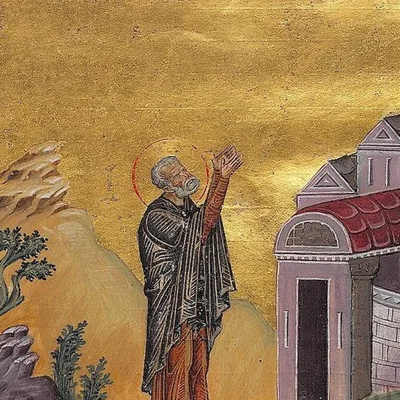
Saint Sabbas
Archimandrite, founder of the Great Lavra
Venerable Alexia González-Barros
Madrid teenager who died at fourteen
In the same region
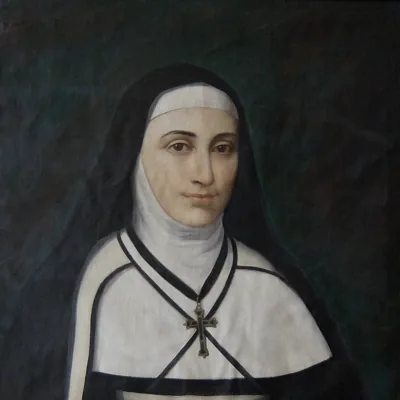
Blessed Adèle de Batz de Trenquelléon
Foundress of the Daughters of Mary Immaculate
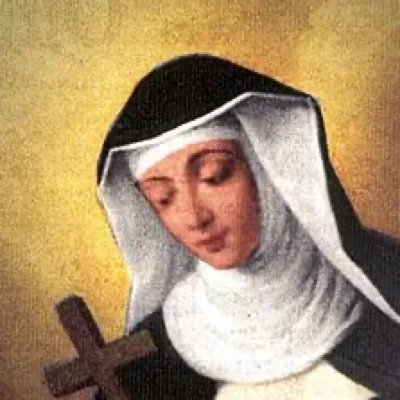
Blessed Agnes of Langeac
Dominican mystic of the Velay
Blessed Alexandrina of Balazar
Paralysed peasant woman, victim for sinners