
A priest of Lancashire trained at the English College in Rome, he exercised a clandestine ministry for ten years before being hanged at Tyburn in 1612.
Born around 1577 at Allerton, near Liverpool, John Almond spent his childhood at Allerton and at Much Woolton before being taken to Ireland at about the age of eight. At twenty he entered the English College in Rome, where he was ordained priest; he completed his studies there with the “grand act”, a public defence of the whole of philosophy and theology, praised by Cardinals Baronius and Tarugi.
Returning to England in 1602 as a secular priest, he exercised a clandestine ministry for ten years, arrested a first time in 1608 and again in 1612. Condemned as a priest, he distributed alms before dying and, on the scaffold, condemned regicide while refusing the oath of allegiance. He was hanged, drawn and quartered at Tyburn on 5 December 1612, saying: “To use this life well is the way that, through death, leads to eternal life.” Beatified in 1929, he was canonised by Paul VI on 25 October 1970 among the Forty Martyrs of England and Wales.
Celebrated on the same day
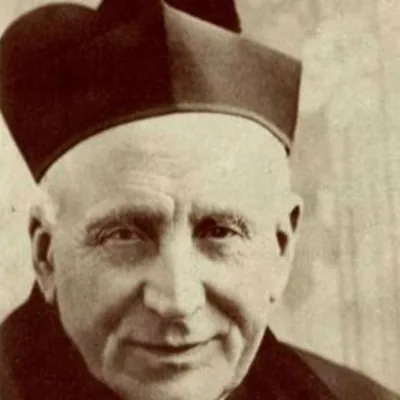
Blessed Filippo Rinaldi
Third successor of Don Bosco
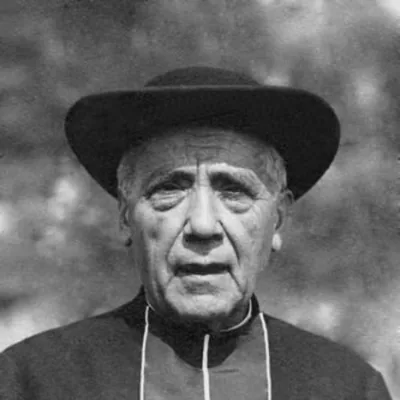
Blessed Jean-Baptiste Fouque
The “Marseille Saint Vincent de Paul”
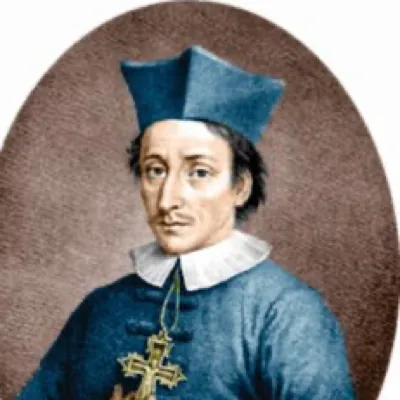
Blessed Nicolas Steno
Anatomist and geologist, missionary bishop of the North
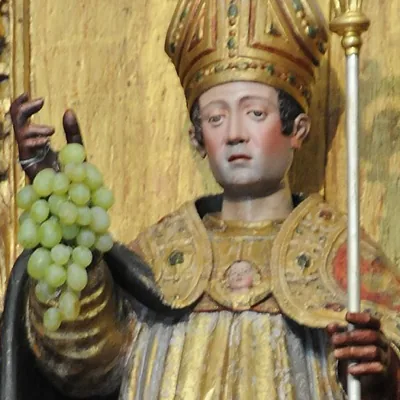
Saint Gerald of Braga
Reforming archbishop of Braga

Saint Sabbas
Archimandrite, founder of the Great Lavra
Venerable Alexia González-Barros
Madrid teenager who died at fourteen
In the same region
Blessed Margaret Pole
Countess of Salisbury, martyr
Blessed Adrian Fortescue
Knight of Malta, Dominican tertiary, martyr
Blessed Dominic Barberi
Passionist, apostle of England