
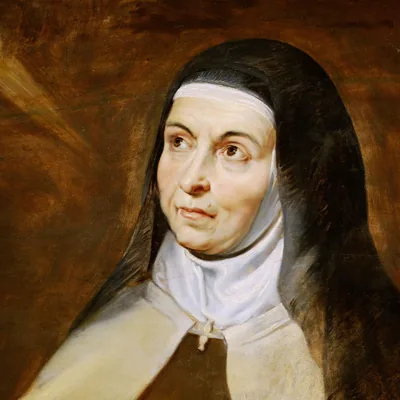
Sainte Thérèse d'Avila
Réformatrice du Carmel, docteur de l'Église
Mystique castillane, elle réforma l'ordre du Carmel et fut la première femme proclamée docteur de l'Église.
Oratio
Heart-to-heart with God, the very breath of all Christian life.
For St Teresa of Ávila, mental prayer is “nothing else than an intimate sharing between friends; it means taking time frequently to be alone with him who we know loves us”. All the saints, whatever their vocation, drew their strength from prayer.
Tradition distinguishes vocal prayer (the Our Father, the Rosary), meditation and silent contemplative prayer. The Liturgy of the Hours, which St Benedict called “the Work of God”, sanctifies the rhythm of the day.
For me, prayer is a surge of the heart; it is a simple look turned toward heaven.
Réformatrice du Carmel, docteur de l'Église
Mystique castillane, elle réforma l'ordre du Carmel et fut la première femme proclamée docteur de l'Église.
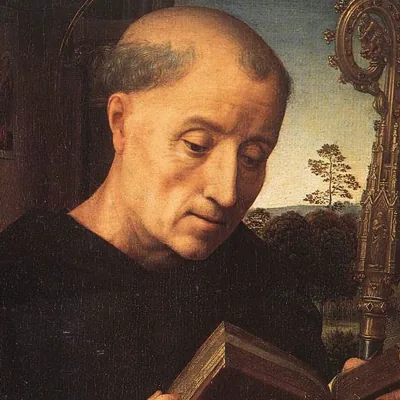
Father of Western monks, patron of Europe
Founder of the monastery of Monte Cassino and author of the Rule that shaped monastic life and European civilisation.
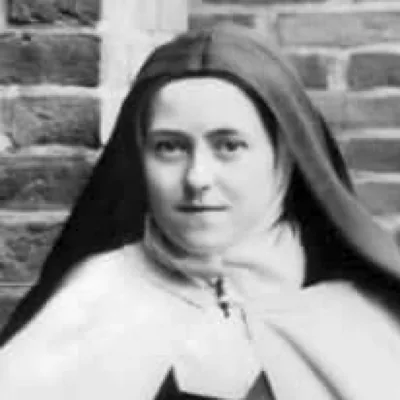
Docteur de l'Église, patronne des missions
Carmélite morte à vingt-quatre ans, elle a enseigné au monde la « petite voie » de la confiance et de l'amour.
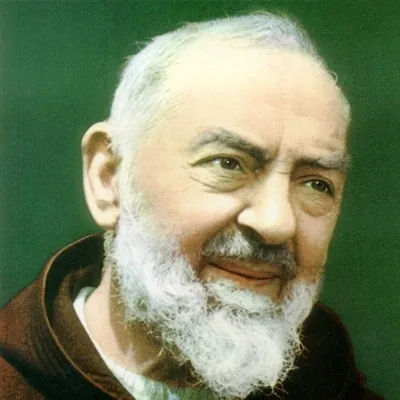
Padre Pio, stigmatised Capuchin
A Capuchin of Apulia, a tireless confessor, he bore the stigmata of the Passion for fifty years.