
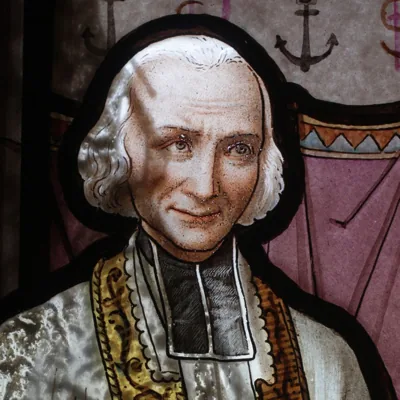
Saint John Vianney
The holy Curé of Ars
Parish priest of a small village of the Dombes, he spent up to sixteen hours a day in the confessional.
Paenitentia
The sacrament of mercy, in which the sinner is raised up and reconciled.
The holy Curé of Ars spent up to sixteen hours a day in the confessional; Padre Pio did so for decades. Both saw in this sacrament the place where the love of God triumphs over sin.
It involves the examination of conscience, contrition, the confession of sins, absolution given by the priest, and penance. St Faustina reminds us that the mercy of God is greater than any misery.
It is not the sinner who returns to God to beg his forgiveness; it is God himself who runs after the sinner.
The holy Curé of Ars
Parish priest of a small village of the Dombes, he spent up to sixteen hours a day in the confessional.
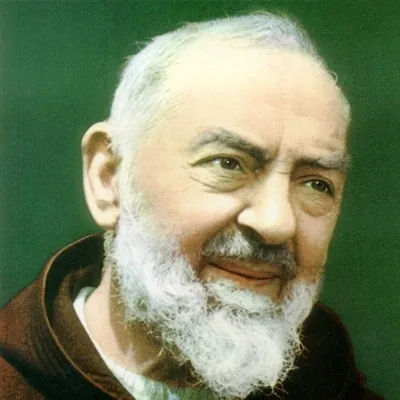
Padre Pio, capucin stigmatisé
Capucin des Pouilles, confesseur infatigable, il porta pendant cinquante ans les stigmates de la Passion.
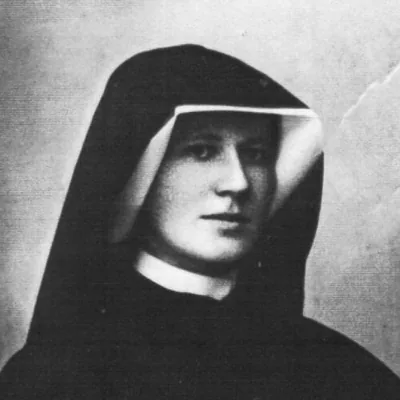
Apostle of Divine Mercy
A Polish nun to whom Christ entrusted the message of Divine Mercy and the image "Jesus, I trust in you".
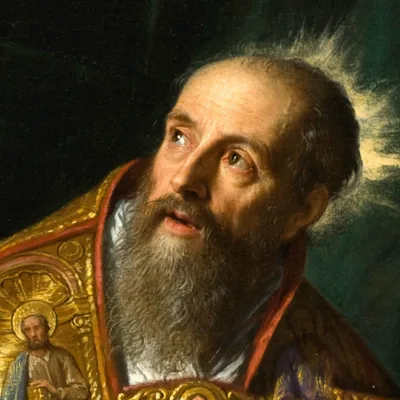
Bishop, doctor of grace
A brilliant rhetorician with a tumultuous youth, converted thanks to his mother’s tears, he became one of the greatest Christian thinkers.