
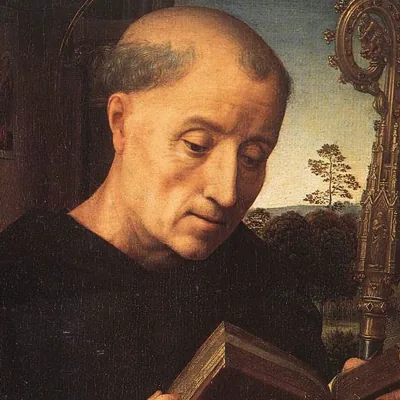
Saint Benedict of Nursia
Father of Western monks, patron of Europe
Founder of the monastery of Monte Cassino and author of the Rule that shaped monastic life and European civilisation.
Lectio divina
The prayerful reading of Scripture, in which God speaks to the heart.
Inherited from the monks, lectio divina unfolds in four stages: reading (lectio), meditation (meditatio), prayer (oratio) and contemplation (contemplatio). It makes the Bible not merely a book for study, but an encounter.
St Jerome declared: “Ignorance of Scripture is ignorance of Christ.” St Augustine was converted on reading a passage of St Paul: “Take up and read.”
Take up and read, take up and read.
Father of Western monks, patron of Europe
Founder of the monastery of Monte Cassino and author of the Rule that shaped monastic life and European civilisation.
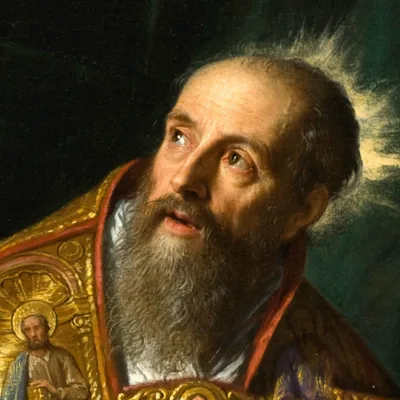
Bishop, doctor of grace
A brilliant rhetorician with a tumultuous youth, converted thanks to his mother’s tears, he became one of the greatest Christian thinkers.
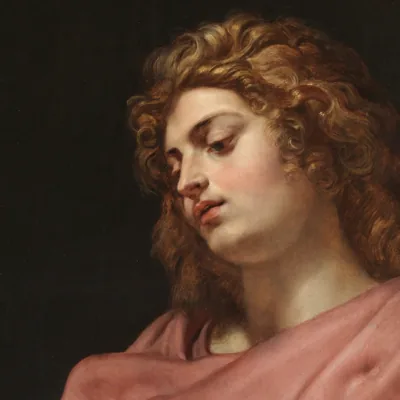
Apostle, the beloved disciple
Son of Zebedee, “the disciple whom Jesus loved”, author of the fourth Gospel, of three letters and of the Apocalypse.
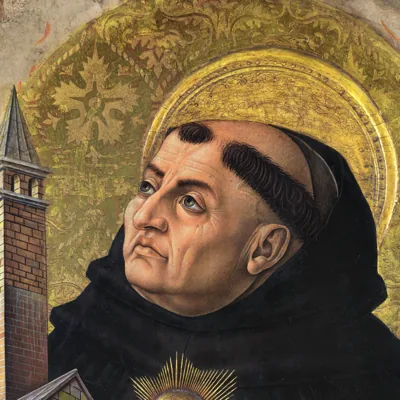
Angelic Doctor
A Dominican and master at the University of Paris, he achieved in the Summa Theologiae an unequalled synthesis of faith and reason.