
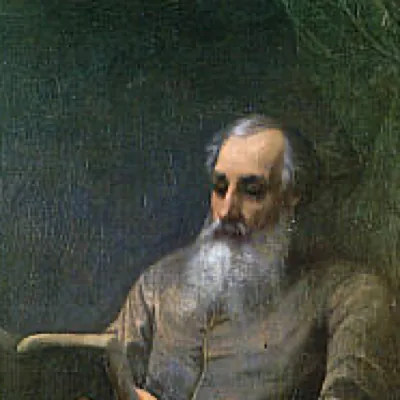
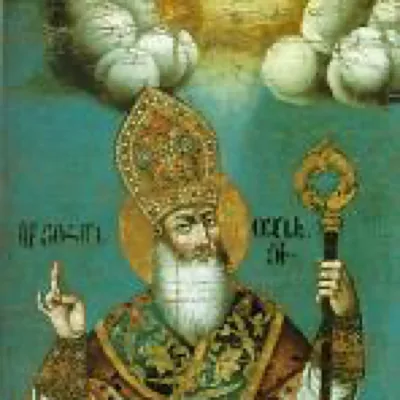
The last catholicos descended from the line of Saint Gregory the Illuminator, he supported Mesrop's invention of the Armenian alphabet and directed the translation of the Bible and the liturgy into the language of the people.
Son of the catholicos Nerses the Great and of the princess Sandukht, Sahak, whom the Armenians nickname Partev, “the Parthian”, descends in a direct line from Saint Gregory the Illuminator. Trained at Constantinople, he knew Greek, Syriac and Persian. Elected catholicos around 387, at the time when Armenia was divided between the Roman Empire and Sasanian Persia, he sat at Vagharshapat, beside the cathedral of Etchmiadzin.
With King Vramshapuh, he encouraged the monk Mesrop Mashtots, who created around 405 the Armenian alphabet. Sahak gathered around them a school of translators, sent disciples to Edessa, Constantinople and Alexandria, and directed the translation of the Bible, first from the Syriac and then from the Greek, as well as that of liturgical texts and of the Fathers. He adhered to the faith defined at the Council of Ephesus (431).
In 428 Persia abolished the Arsacid monarchy; Sahak, who had refused to associate himself with the deposition of King Artashes, was removed from his see in favour of prelates acceptable to the Sasanians, then allowed to exercise his spiritual ministry again. He died in exile at Blur, in the canton of Bagrevand, in 438, and lies at Ashtishat, in Taron. The Roman Martyrology commemorates him on 8 September as the bishop who “translated into Armenian the Holy Scripture and the liturgy”.
Celebrated on the same day
Blessed Apolonia Lizárraga
Superior general of the Carmelites of Charity, martyr
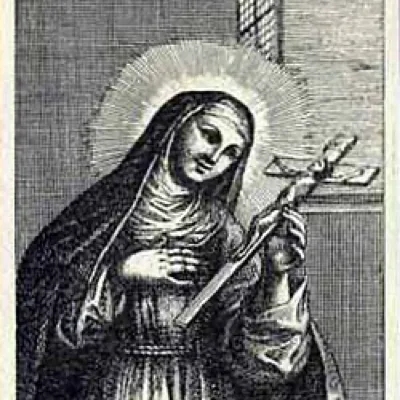
Blessed Seraphina Sforza
Repudiated lady of Pesaro turned Poor Clare
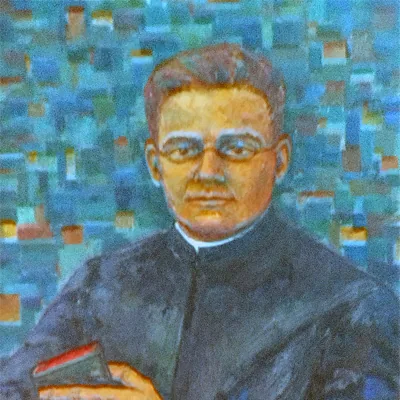
Blessed Francis Mary of the Cross Jordan
Founder of the Salvatorians
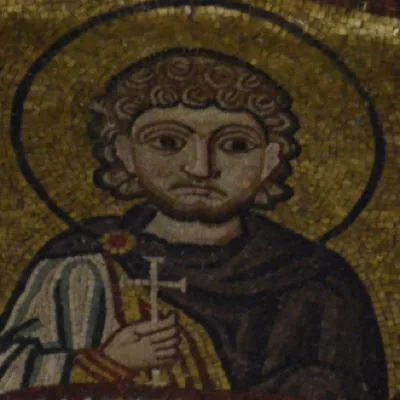
Saint Adrian of Nicomedia
Officer and martyr
Saint Corbinian of Freising
First Bishop of Freising
Saint Sergius I
Pope who introduced the Agnus Dei at Mass
In the same region
Saint Gregory of Tatev
Theologian, doctor of the Armenian Church
Saint Gregory the Illuminator
Apostle of Armenia
Saint John of Odzun
Catholicos of the Armenians, “the Philosopher”