
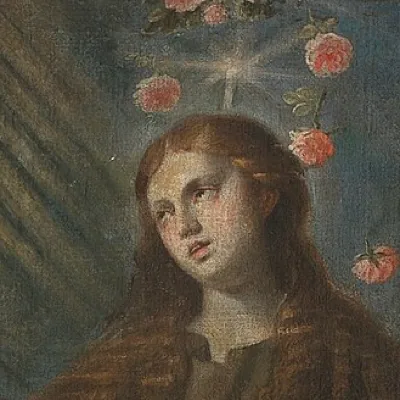
A girl of Viterbo who preached publicly for the pope against the partisans of the emperor Frederick II, she was exiled with her family and died at eighteen; Viterbo carries her every 3 September on its famous Macchina.
Rose was born around 1233 at Viterbo, then disputed between the pope and the emperor Frederick II. As a child she distinguished herself by her piety; after a grave illness around 1250 she took the habit of the Franciscan Third Order and began to preach in the streets, exhorting her fellow citizens to remain faithful to the pope.
The Ghibelline authorities banished the family, who took refuge at Soriano nel Cimino. According to her Life, Rose announced there the emperor's approaching death, which occurred in December 1250; she then returned to Viterbo. The Poor Clares of the monastery of San Damiano refused to receive her, for lack of a dowry; she lived in retirement with her parents and died on 6 March 1251, aged about eighteen.
On 4 September 1258 Alexander IV had her body, found intact, transferred to the monastery that bears her name, where it is still venerated. Callixtus III opened in 1457 a canonisation process which was not formally concluded: the Roman Martyrology calls her blessed, but Viterbo, of which she is the patron, celebrates her as a saint and carries the Macchina di Santa Rosa through the city each 3 September.
Celebrated on the same day
The Forty-Two Martyrs of Amorium
Byzantine officers, martyrs

Saint Chrodegang of Metz
Bishop of Metz, lawgiver of the canons
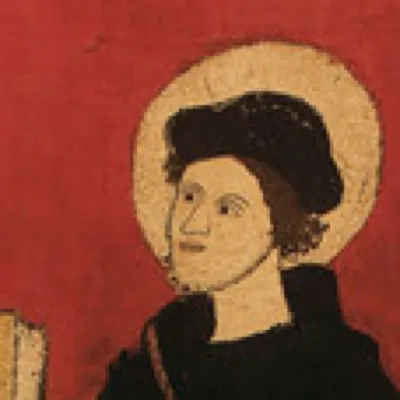
Saint Fridolin of Säckingen
Missionary monk, apostle of the Upper Rhine
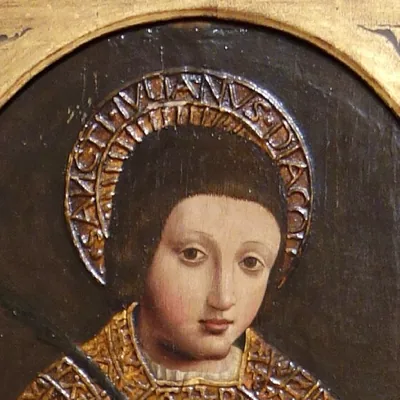
Saint Julian of Toledo
Archbishop of Toledo, theologian
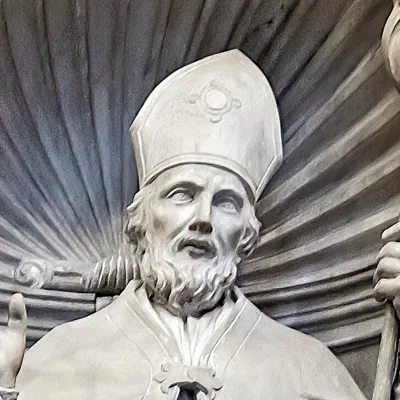
Saint Oleguer of Barcelona
Bishop of Barcelona, archbishop of Tarragona
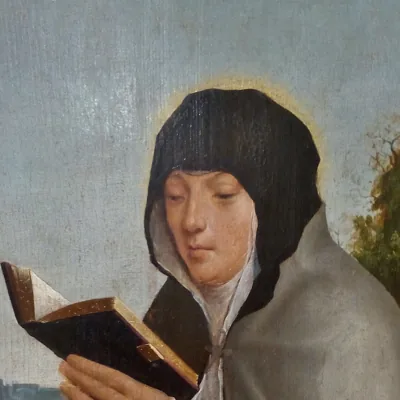
Saint Colette of Corbie
Reformer of the Poor Clares
Servant of God Peter Porekuu Dery
Cardinal, Archbishop of Tamale
In the same region
Blessed Angelina of Marsciano
Foundress of the Franciscan Sisters of the Third Order Regular
Blessed Anna Rosa Gattorno
Widow, foundress of the Daughters of St Anne
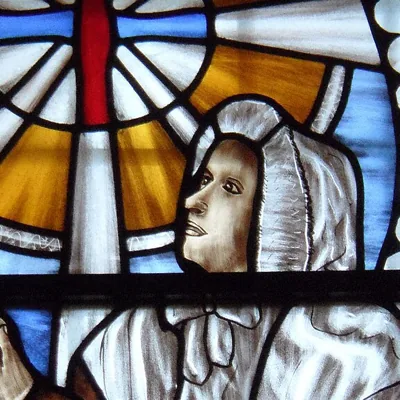
Blessed Anna Maria Taigi
Mother of a family and Roman mystic