
A ninth-century monk who withdrew as a hermit in Cornwall, he gave his name to the village of St Neot and, through his relics, to the town of St Neots.
According to his Lives, Neot was a monk at Glastonbury before withdrawing as a hermit on Bodmin Moor, at the place now called St Neot. Tradition says he was so small that he had to stand on a stool to celebrate at the altar, and adds that he advised King Alfred the Great. The king’s biographer, Asser, reports that Alfred came to pray in a church in Cornwall ‘where Saint Neot now rests’.
He died around 877. Around 974 part of his relics was transferred to the priory of Eynesbury, in Huntingdonshire, around which the town of St Neots grew up. The stained-glass windows of the early sixteenth century in the church of St Neot, in Cornwall, tell his legend.
Celebrated on the same day
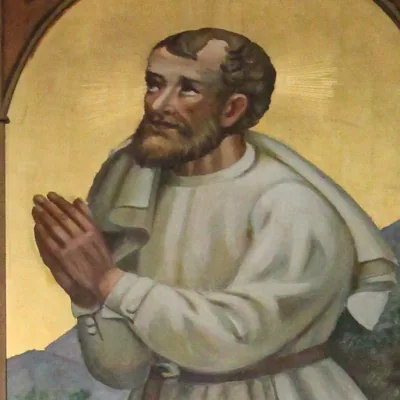
Blessed Giovanni Colombini
Sienese merchant, founder of the Jesuati
Saint Fabius of Caesarea
Standard-bearer and martyr
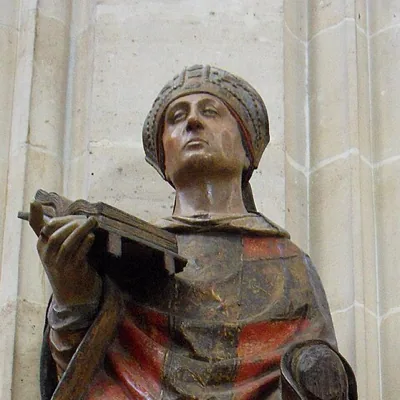
Saint Germanus of Auxerre
Bishop of Auxerre, defender of Christian Britain
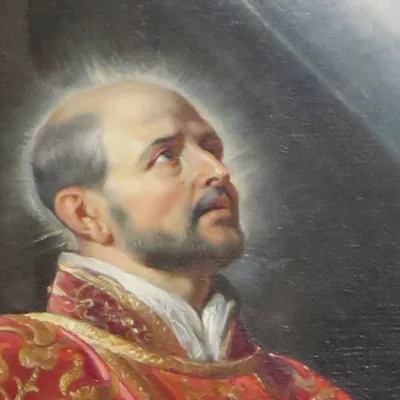
Saint Ignatius of Loyola
Founder of the Society of Jesus
Saint Justin de Jacobis
Vincentian bishop, apostle of Abyssinia
Saint Helen of Skövde
Widow, held to be a martyr, patroness of Västergötland
In the same region
Blessed Margaret Pole
Countess of Salisbury, martyr
Blessed Adrian Fortescue
Knight of Malta, Dominican tertiary, martyr
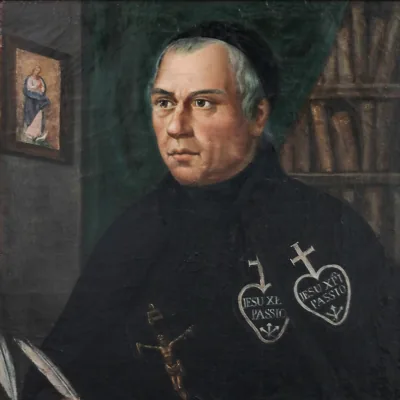
Blessed Dominic Barberi
Passionist, apostle of England