
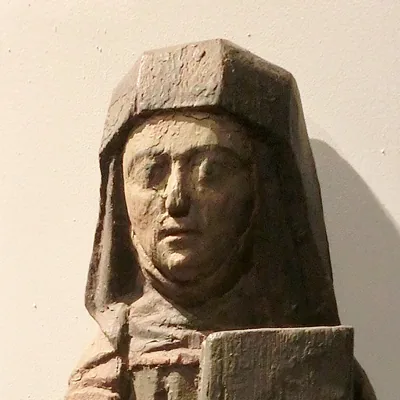
A noble widow of Västergötland, benefactress of the church of Skövde and pilgrim to Jerusalem, unjustly killed by the kinsmen of her son-in-law; the Roman Martyrology holds her to be a martyr.
Elin, whom the Latin tradition calls Helena, was a noblewoman of Västergötland, widowed very young, who devoted her goods to the poor and generously endowed the church of Skövde. According to her legend, she then went on pilgrimage to Jerusalem.
During her absence, her daughter’s husband, who ill-treated his wife, was killed by servants. The relatives of the dead man accused Helen of having ordered the murder; on her return, as she was on her way to the consecration of the church of Götene, they killed her, around 1160. She was buried at Skövde, and a spring is said to have welled up at the place of her death; it is told that a blind man recovered his sight by contact with her severed finger, which still bore the ring brought back from the Holy Land.
Her cult is attested from the diocesan statutes of Skara of 1281, and Bishop Brynolf Algotsson composed her office. A late, unverified tradition attributes her canonisation to Pope Alexander III in 1164. The Roman Martyrology commemorates her on 31 July: “at Skövde, in Sweden, Saint Helen, widow, who, unjustly killed, is held to be a martyr”. The church of Skövde today bears her name.
Celebrated on the same day

Blessed Giovanni Colombini
Sienese merchant, founder of the Jesuati
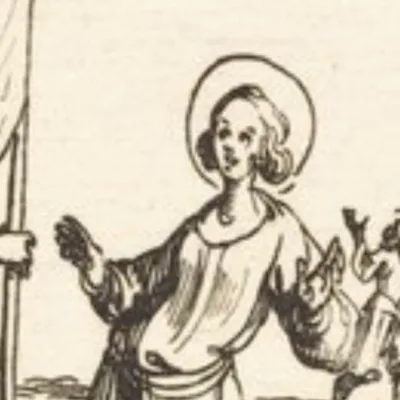
Saint Fabius of Caesarea
Standard-bearer and martyr
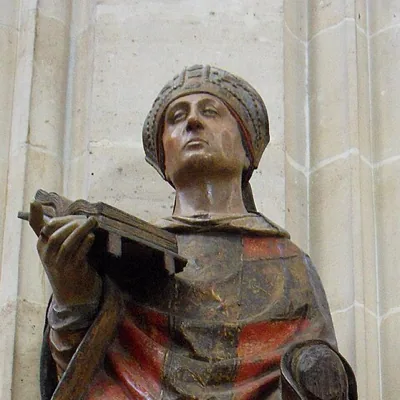
Saint Germanus of Auxerre
Bishop of Auxerre, defender of Christian Britain
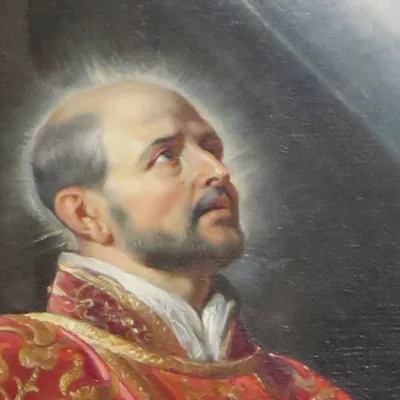
Saint Ignatius of Loyola
Founder of the Society of Jesus
Saint Justin de Jacobis
Vincentian bishop, apostle of Abyssinia
Saint Neot
Monk and hermit in Cornwall
In the same region
Blessed Ingrid of Skänninge
Widow, pilgrim, foundress of the Dominican nuns of Sweden
Blessed Nils Hermansson
Bishop of Linköping, friend of Saint Bridget

Saint Botvid
Lay missionary, apostle of Södermanland