
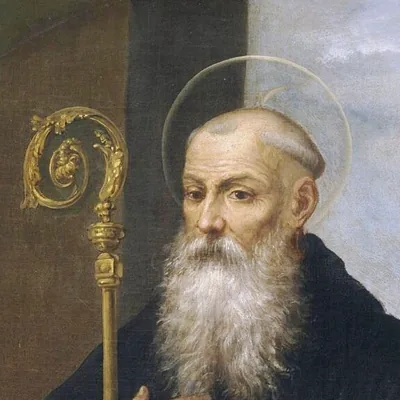
A hermit from the neighbourhood of Nîmes, honoured as the founder of the abbey of Saint-Gilles, he became one of the most popular saints of the Middle Ages, even though his life is mostly legend.
The story of Giles is known almost entirely from a tenth-century Latin Life, largely legendary. The Roman Martyrology is content to place him in the sixth or seventh century, in the region of Nîmes, in the Flavian valley where he is said to have built a monastery and ended his days; it has been proposed to identify him with an abbot Aegidius sent to Rome by Saint Caesarius of Arles in 514. The two bulls of Pope John VIII that link the foundation of his monastery to the Visigothic king Wamba are forgeries. Tradition places his death on a 1 September, around 720.
According to the legend, Giles, born at Athens, made his way to Provence and lived as a hermit near the Gard, nourished by the milk of a hind. Pursued by a king’s hunters, the animal took refuge with him and the arrow meant for it wounded the hermit in the hand; the king, called Wamba by anachronism, offered him the means to found a monastery. Another account has him obtain by his Mass the forgiveness of a sin that Charles Martel, or Charlemagne, did not dare to confess.
The abbey, placed under his name around 910, became a great stage on the pilgrimages to Rome and Compostela, and the town of Saint-Gilles grew up around his tomb, whose sarcophagus is ancient but whose inscription dates from the tenth century. Counted among the Fourteen Holy Helpers, Giles is invoked against fear, epilepsy and madness, and is patron of cripples, beggars and blacksmiths; more than two thousand churches throughout Europe are dedicated to him.
Celebrated on the same day
Blessed Bronisława
Premonstratensian of Zwierzyniec
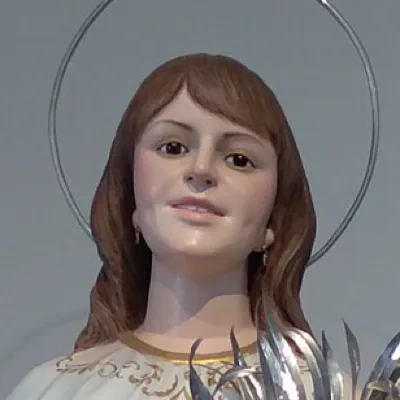
Blessed Isabel Cristina Mrad Campos
Martyr of Juiz de Fora
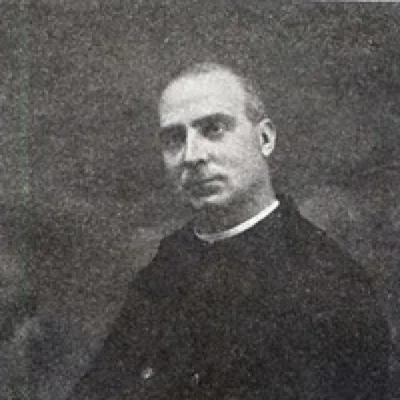
Blessed Josep Samsó i Elias
Archpriest of Mataró, martyr
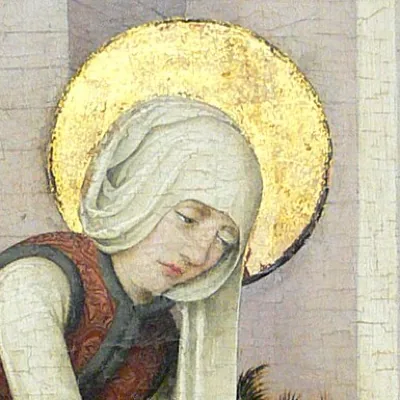
Saint Verena
Virgin and hermit of Zurzach
Venerable Maria Giuseppa Scandola
Comboni missionary in Sudan
In the same region
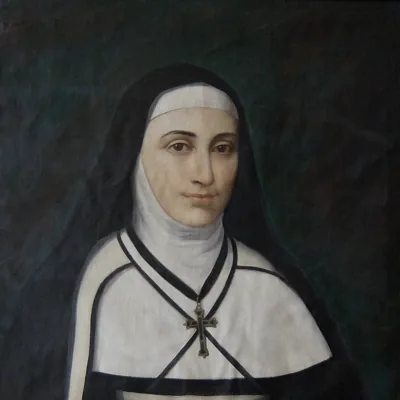
Blessed Adèle de Batz de Trenquelléon
Foundress of the Daughters of Mary Immaculate
Blessed Agnes of Langeac
Dominican mystic of the Velay
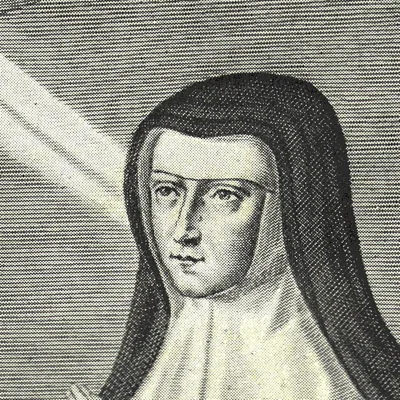
Blessed Alix Le Clerc
Foundress of the Congregation of Notre Dame