
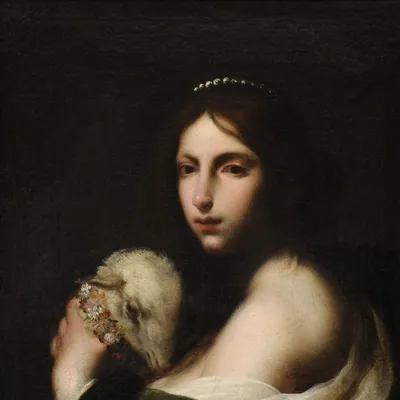
A young Roman girl of twelve or thirteen who died for her faith and her virginity, probably under Diocletian, celebrated by Ambrose and Damasus, named in the Roman Canon and venerated on the Via Nomentana.
Agnes is one of the best attested Roman martyrs: the Depositio martyrum of 354 records her feast on 21 January on the Via Nomentana, Saint Ambrose celebrated in 377 in his treatise On Virgins this twelve-year-old child who faced the executioner, Pope Damasus dedicated to her an inscription still preserved in her basilica, and the poet Prudentius a hymn. The year of her death remains uncertain: it is most often placed around 304, under Diocletian, sometimes in the time of Valerian.
The accounts differ on her torment: the sword according to Ambrose and Prudentius, fire according to Damasus. Her Passion, falsely attributed to Ambrose and later than the 5th century, adds to it the rejected suitor, son of the prefect of Rome, and her exposure in a brothel from which she came out unharmed, covered by her hair. Tradition places this episode at the Stadium of Domitian, present-day Piazza Navona, where the church of Sant’Agnese in Agone stands.
Over her tomb Constantina, daughter of Constantine, had a basilica built, beside which stands her mausoleum, the present Santa Costanza; Pope Honorius I rebuilt it in the 7th century and had it adorned with the apse mosaic in which Agnes appears as an empress. Each 21 January two lambs are blessed there, whose wool is used to weave the pallia which the pope gives to metropolitan archbishops. Her name appears in the Roman Canon of the Mass.
Explore the 13 moments of their life →
Here, then, is a twofold martyrdom in one victim, of modesty and of faith: she remained a virgin and obtained martyrdom.
Celebrated on the same day
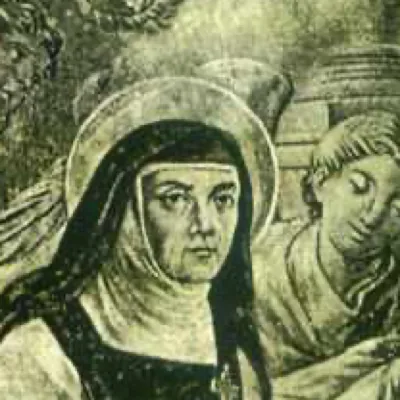
Blessed Inés de Benigànim
Discalced Augustinian, mystic
Blessed Jean-Baptiste Turpin du Cormier and Companions
Martyrs of Laval
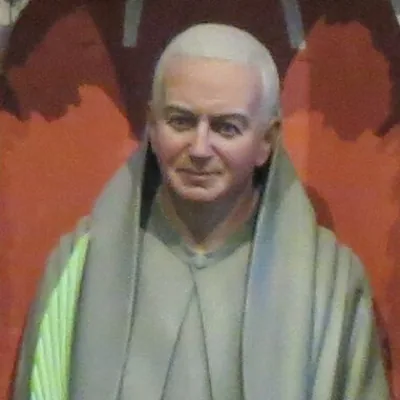
Saint Alban Roe
Benedictine, prisoner of the Fleet
Saint Epiphanius of Pavia
Bishop of Pavia, peacemaker of kings
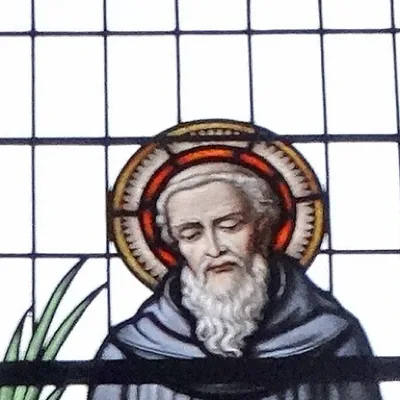
Saint Meinrad of Einsiedeln
Hermit and martyr of the “Dark Forest”
Saints Fructuosus, Augurius and Eulogius
Bishop of Tarragona and his two deacons, martyrs
In the same region
Blessed Angelina of Marsciano
Foundress of the Franciscan Sisters of the Third Order Regular
Blessed Anna Rosa Gattorno
Widow, foundress of the Daughters of St Anne
Blessed Anna Maria Taigi
Mother of a family and Roman mystic