
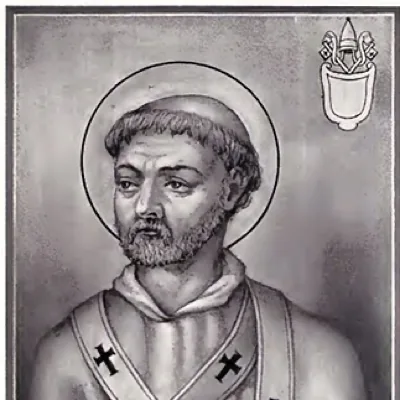
Fifteenth Bishop of Rome for nearly twenty years, at the turn of the third century, Zephyrinus entrusted to his deacon Callistus the organisation of the cemetery on the Via Appia, the nucleus of the catacomb that bears the latter’s name.
Successor of Victor around 199, Zephyrinus governed the Church of Rome until 217, at a time agitated by debates on the person of Christ. Eusebius (Ecclesiastical History, V, 28) reports how the confessor Natalius, who had become bishop of the Adoptionist sect of Theodotus, came and threw himself in tears at Zephyrinus’s feet to be readmitted into the Church. It is also under his pontificate that the Roman priest Gaius writes that he can show the “trophies” of the apostles Peter and Paul, on the Vatican and on the road to Ostia (Ecclesiastical History, II, 25).
The priest Hippolytus, in his Refutation of All Heresies, depicts him as a simple man without education, dominated by Callistus and indulgent towards Modalist theories; this is the portrait of an adversary. It nevertheless confirms that Zephyrinus recalled Callistus, a former slave freed from the mines of Sardinia, and put him in charge of the cemetery on the Via Appia. The old calendar celebrated him as a martyr on 26 August; the Roman Martyrology of 2004 no longer gives him this title and recalls on 20 December his burial near the cemetery of Callistus.
Celebrated on the same day
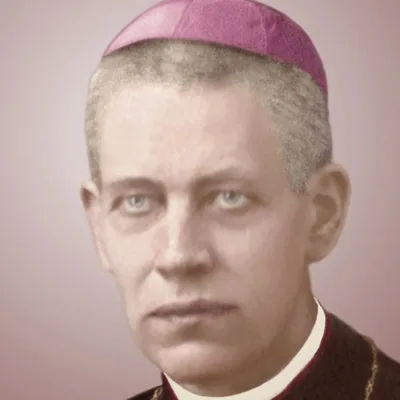
Blessed Anton Durcovici
Bishop of Iași, martyr of Sighet prison
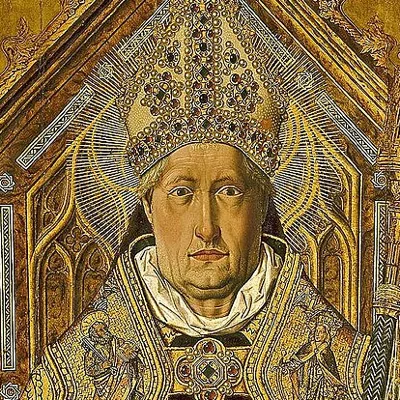
Saint Dominic of Silos
Abbot of Silos
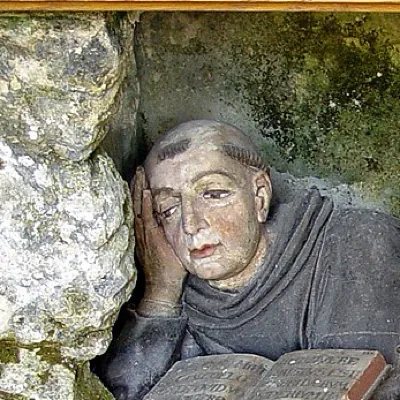
Saint Ursicinus of Saint-Ursanne
Disciple of Saint Columbanus, hermit of the Doubs
Saint Vincent Romano
Parish priest of Torre del Greco
In the same region

Blessed Angelina of Marsciano
Foundress of the Franciscan Sisters of the Third Order Regular
Blessed Anna Rosa Gattorno
Widow, foundress of the Daughters of St Anne
Blessed Anna Maria Taigi
Mother of a family and Roman mystic