
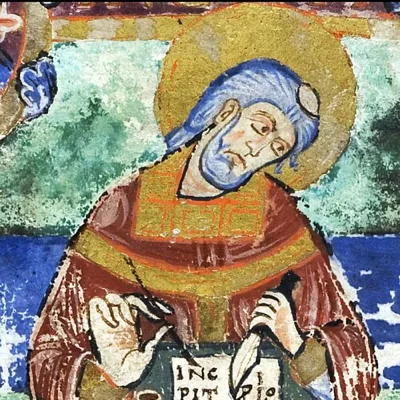
A poet born in Italy, who came to Gaul to the tomb of Saint Martin, he settled at Poitiers with Saint Radegund, composed the “Vexilla Regis” and the “Pange lingua” and became bishop of the city.
Born around 530 at Duplavilis, the present Valdobbiadene, near Treviso in Veneto, Venantius Honorius Clementianus Fortunatus studied grammar, rhetoric and law at Ravenna. Healed of an eye complaint that he attributed to Saint Martin, he set out for Gaul on pilgrimage to his tomb. Having arrived at Metz in the spring of 566, he composed a poem for the wedding of King Sigebert and Brunhilda, then frequented the Merovingian courts, where his verses won him the protection of the great.
After going to Tours, he settled at Poitiers with Queen Radegund and the abbess Agnes, of whom he became the friend and counsellor. Ordained priest around 576 and a friend of Gregory of Tours, he wrote eleven books of poems, a Life of Saint Martin in verse and prose Lives of saints of Gaul, among them Germanus of Paris, Albinus of Angers and Radegund. For the arrival of the relic of the True Cross at Sainte-Croix in 569, he composed the hymns “Vexilla Regis” and “Pange lingua gloriosi proelium certaminis”, still sung in the liturgy of the Passion.
Around 600 he was chosen as Bishop of Poitiers, succeeding Plato. He died at the beginning of the seventh century, around 605 according to the Roman Martyrology, historians proposing dates between 600 and 609, and was buried at Poitiers. His work, which unites the tradition of ancient Latin poetry with Christian piety, makes him the last great Latin poet of Late Antique Gaul; his poems, often addressed to kings, bishops and his friends, are also a precious source on Merovingian society.
The royal banners forward go; the cross shines forth in mystic glow.
Celebrated on the same day
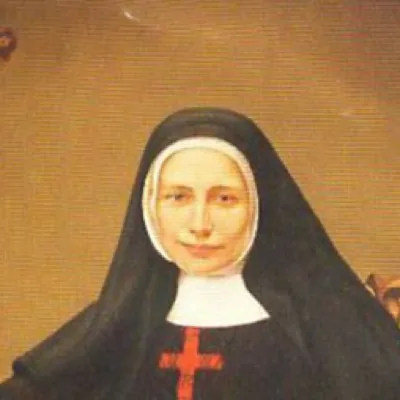
Blessed Franziska Schervier
Foundress of the Poor Sisters of Saint Francis of Aachen
Saint Agnellus of Naples
Abbot of San Gaudioso, protector of Naples
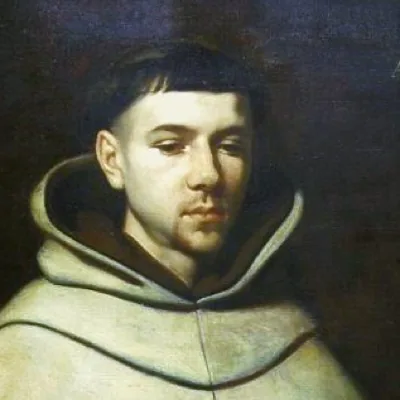
Saint John of the Cross
Mystical doctor
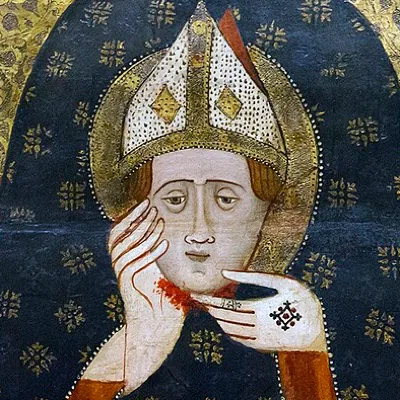
Saint Nicasius of Reims
Bishop of Reims, martyr
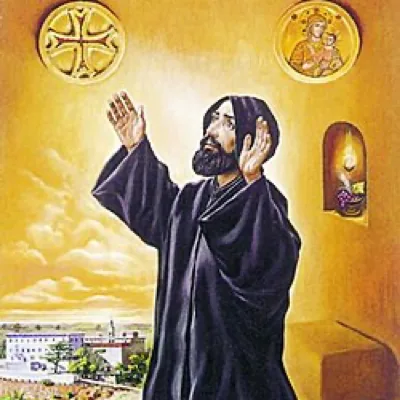
Saint Nimatullah Kassab Al-Hardini
Maronite monk, master of Saint Charbel

Saints Ares, Promus and Elias
Egyptians, martyrs at Ascalon
Saints Thyrsus, Leucius and Callinicus
Martyrs of Bithynia
Servant of God Catherine de Hueck Doherty
Foundress of Madonna House
In the same region
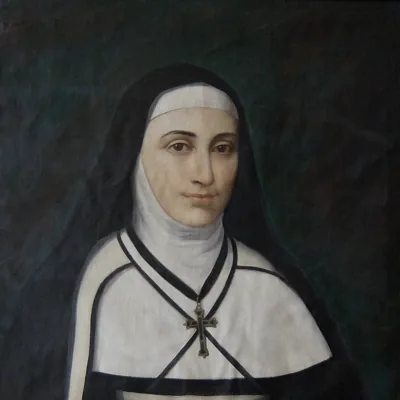
Blessed Adèle de Batz de Trenquelléon
Foundress of the Daughters of Mary Immaculate
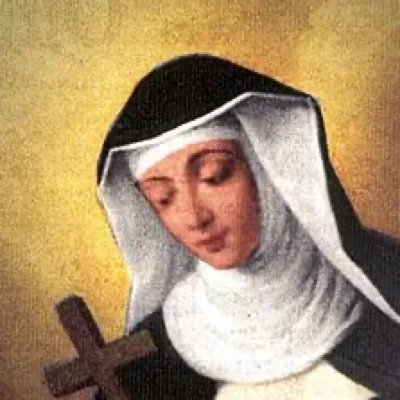
Blessed Agnes of Langeac
Dominican mystic of the Velay
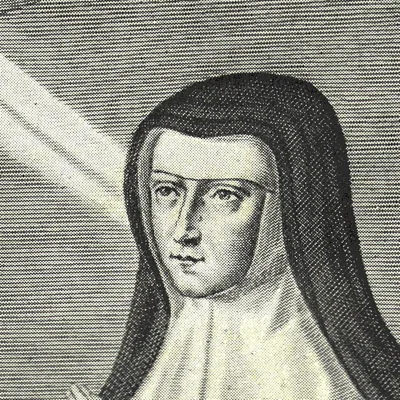
Blessed Alix Le Clerc
Foundress of the Congregation of Notre Dame