
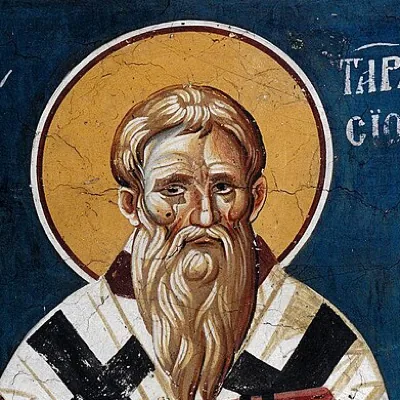
A senior lay official elected patriarch, he opened in 787 the Second Council of Nicaea, which restored the veneration of the holy images.
Of a patrician family, Tarasius was first secretary of the imperial chancery when the empress Irene had him elected patriarch in 784, while he was still a layman. He made it a condition that an ecumenical council be convened, in communion with Pope Hadrian I, to put an end to the dispute over images.
After a first attempt prevented by iconoclast soldiers in 786, the council met at Nicaea in 787: Tarasius opened and directed it, and the Fathers defined the legitimacy of the veneration of the images of Christ, the Mother of God and the saints. A charitable pastor, he fed the poor and founded hospices. He stood up to the emperor Constantine VI over his illegitimate remarriage and died in 806.
Celebrated on the same day
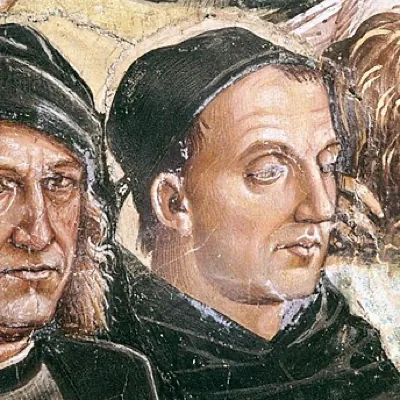
Blessed Fra Angelico
The Dominican painter of San Marco
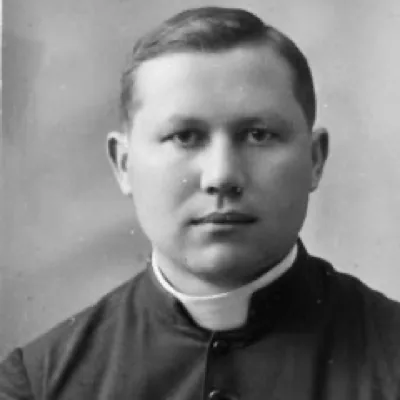
Blessed Jerzy Kaszyra
Marian priest, martyr of Rossitsa
Saint Helladius of Toledo
Royal minister turned monk, bishop of Toledo
Saint Shahdost (Sadoth) and Companions
Catholicos of Seleucia-Ctesiphon, martyrs of Beth Lapat
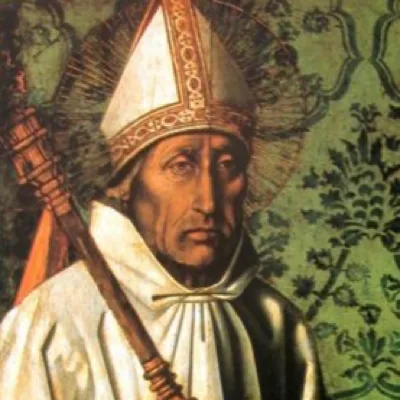
Saint Theotonius
First Portuguese saint
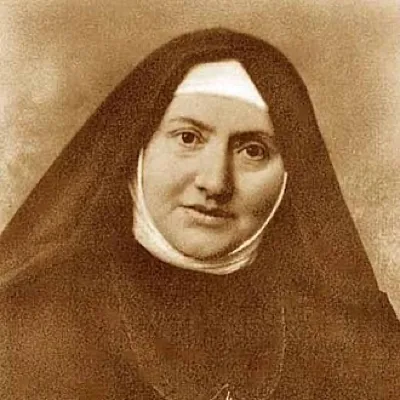
Saint Geltrude Comensoli
Foundress of the Sacramentine Sisters of Bergamo
In the same region
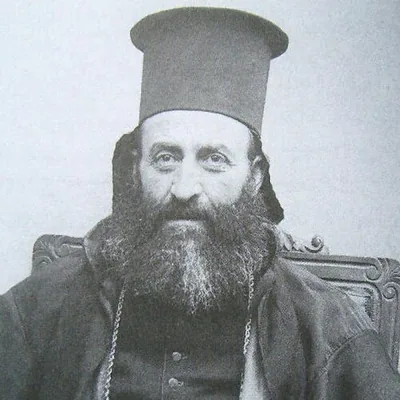
Blessed Flavianus Michael Malke
Syriac Catholic bishop of Gazireh, martyr
Blessed Salvatore Lilli
Franciscan, missionary in Lesser Armenia, martyr
Blessed Salvatore Lilli and his Seven Companions
Martyrs of Marash