
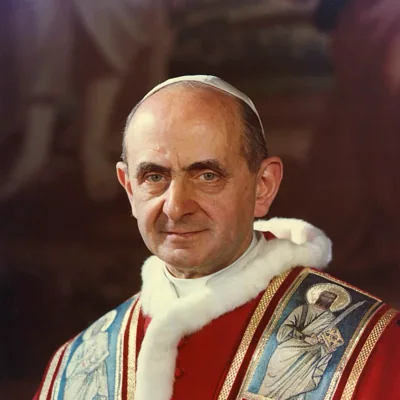
A son of the Catholic middle class of Brescia, Archbishop of Milan and then pope, he brought the Second Vatican Council to its conclusion and was the first pope to travel the world.
Giovanni Battista Montini was born on 26 September 1897 at Concesio, near Brescia, into a committed Catholic family: his father ran a newspaper and would become a deputy. Of fragile health, he was ordained a priest in 1920, entered the Secretariat of State and became national chaplain of FUCI, the federation of Catholic university students. Substitute and close collaborator of Pius XII, he was appointed Archbishop of Milan in 1954, where he launched a great mission in the working-class districts; John XXIII created him cardinal in 1958.
Elected pope on 21 June 1963, he continued the Second Vatican Council, closed it in 1965 and oversaw its implementation, notably the liturgical reform. The first pope to travel by aeroplane, he went to the Holy Land in 1964, where he embraced Patriarch Athenagoras, with whom in 1965 he lifted the excommunications of 1054, then to the UN, to India, to Fatima, to Colombia, to Uganda and to the Philippines. He published Populorum progressio (1967), Humanae vitae (1968), which brought him sharp opposition, and Evangelii nuntiandi (1975).
He died at Castel Gandolfo on 6 August 1978, on the feast of the Transfiguration. Beatified in 2014, he was canonised by Pope Francis on 14 October 2018, with Óscar Romero. His feast is fixed on 29 May, the anniversary of his priestly ordination.
Modern man listens more willingly to witnesses than to teachers, and if he does listen to teachers, it is because they are witnesses.
Celebrated on the same day
Blessed Guillaume Arnaud and Companions
Martyrs of Avignonet
Blessed Joseph Gérard
Oblate of Mary Immaculate, apostle of the Basotho
Blessed Paul Yun Ji-chung
Scholar, first martyr of Korea
Blessed Paul Yun Ji-chung and 123 Companions
The 124 martyrs of Korea
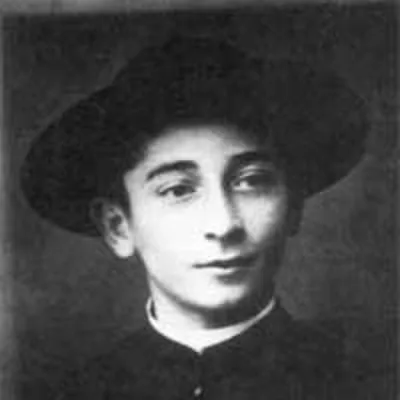
Blessed Rolando Rivi
Seminarian martyr at fourteen
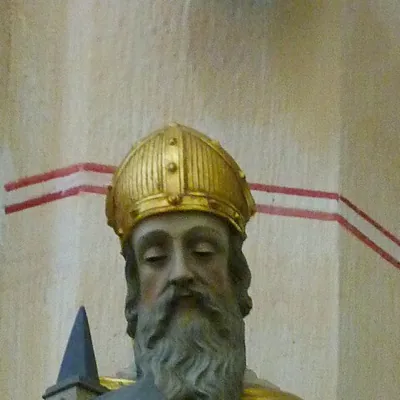
Saint Maximinus of Trier
Bishop of Trier, defender of Saint Athanasius
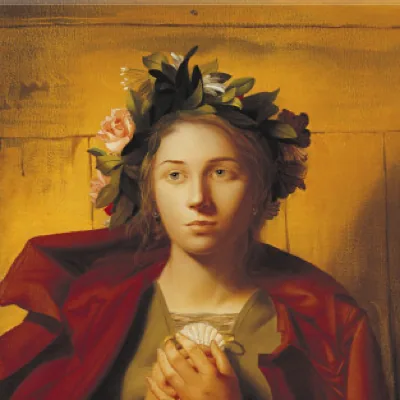
Saint Bona of Pisa
Pilgrim, patron of flight attendants
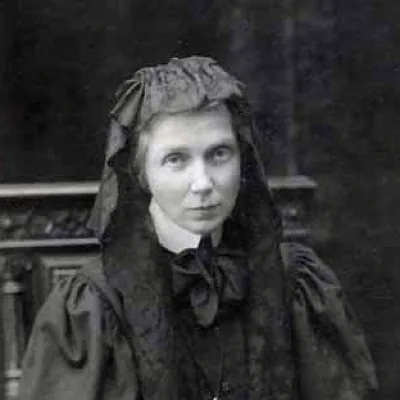
Saint Ursula Ledóchowska
Foundress of the Grey Ursulines
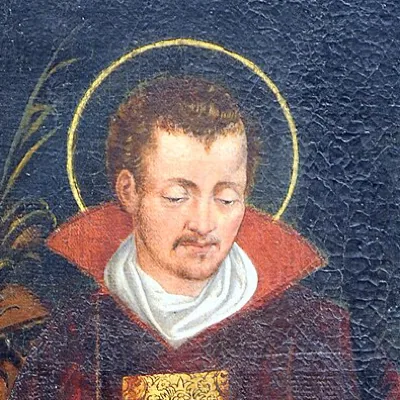
Saints Sisinnius, Martyrius and Alexander
Martyrs of the Val di Non, missionaries from Cappadocia
In the same region
Blessed Angelina of Marsciano
Foundress of the Franciscan Sisters of the Third Order Regular
Blessed Anna Rosa Gattorno
Widow, foundress of the Daughters of St Anne
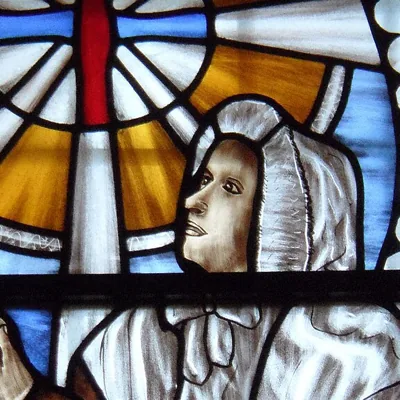
Blessed Anna Maria Taigi
Mother of a family and Roman mystic