
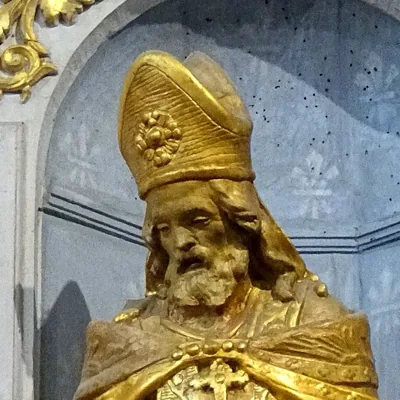
Bishop of the Vermandois who transferred his see to Noyon and consecrated Queen Radegund to God, he is one of the most popular saints of northern France.
Born at Salency, near Noyon, of a Frankish father and a Gallo-Roman mother according to tradition, Medard was ordained priest by Alomer, bishop of Vermand. Around 530, at the latter’s death, he was chosen to succeed him despite his reluctance. He soon moved the episcopal see from Vermand, an open town, to Noyon, a fortified city; he was also entrusted, according to an ancient tradition, with the Church of Tournai, which remained united to that of Noyon until 1146.
His biographers show him of proverbial kindness, giving alms even to the idle and letting thieves carry off the honey of his hives. According to the Life of Saint Radegund written by Venantius Fortunatus, it was he who consecrated to God Queen Radegund, wife of Clotaire I, by giving her the veil of a deaconess at Noyon. He died around 560; King Clotaire had his body carried near Soissons, where the abbey of Saint-Médard rose, in which he himself had himself buried.
His cult, attested by Gregory of Tours and Fortunatus, spread throughout northern Gaul, then to the Rhineland. Late legends, such as that of the eagle that sheltered him from the rain when he was a child, have made him the master of the weather: “If it rains on Saint Medard’s day, it will rain for forty days more.” Tradition also attributes to him the institution of the Rosière of Salency, his native village. Relics of the saint are kept in Paris, in the church of Saint-Médard.
Celebrated on the same day
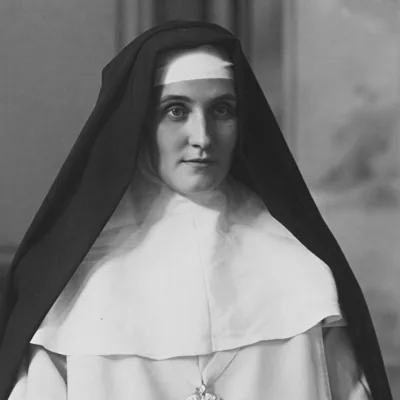
Blessed Mary of the Divine Heart
Sister of the Good Shepherd, apostle of the Sacred Heart
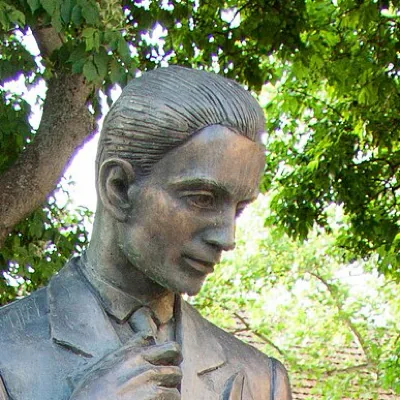
Blessed István Sándor
Salesian brother, martyr
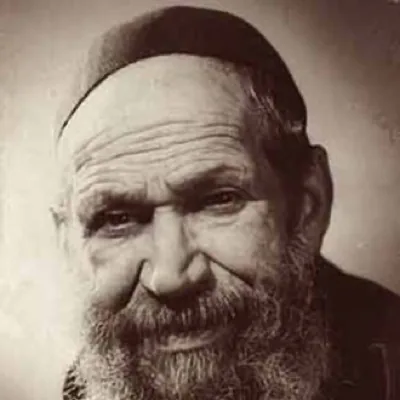
Blessed Nicola da Gesturi
Capuchin questing brother of Cagliari
Saint William of York
Archbishop of York
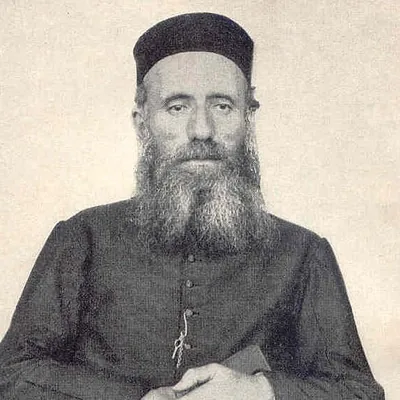
Saint Jacques Berthieu
Jesuit, martyr of Madagascar
Saint Maximinus of Aix
First bishop of Aix according to tradition
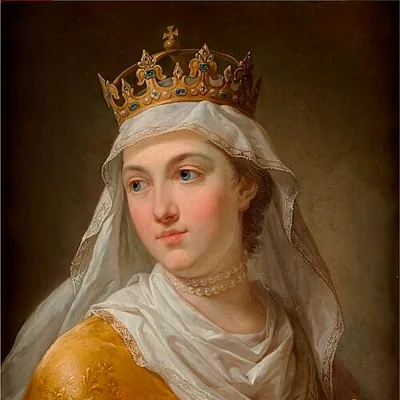
Saint Hedwig of Anjou
Queen of Poland, apostle of Lithuania
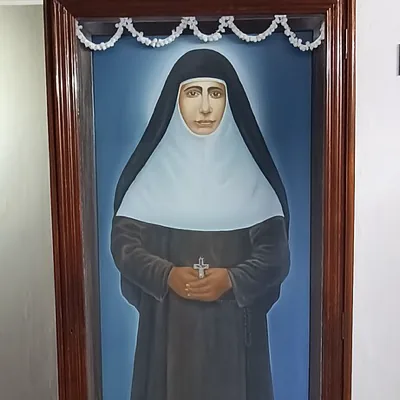
Saint Mariam Thresia
Mystic, foundress of the Congregation of the Holy Family
Venerable Felix Maria Ghebre-Amlak
Eritrean priest of the Ge’ez rite, Cistercian monk
In the same region
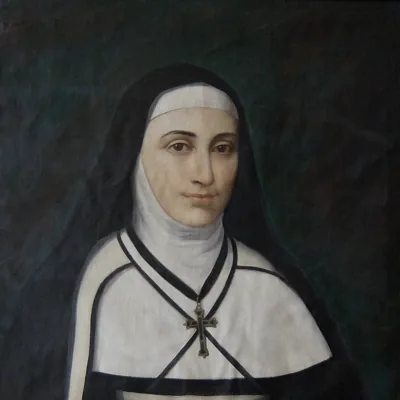
Blessed Adèle de Batz de Trenquelléon
Foundress of the Daughters of Mary Immaculate
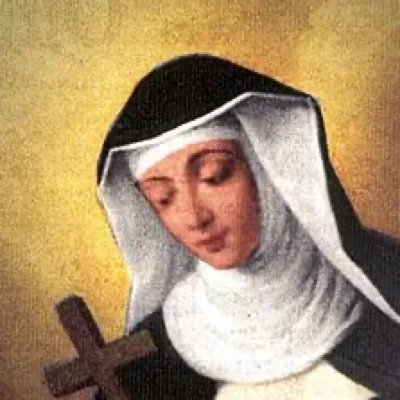
Blessed Agnes of Langeac
Dominican mystic of the Velay
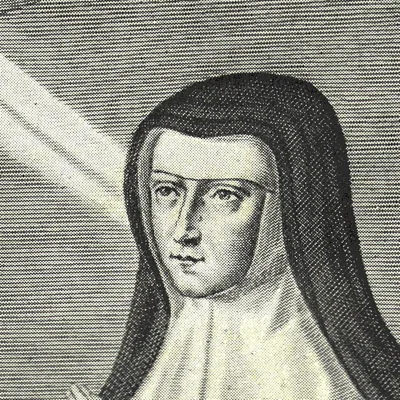
Blessed Alix Le Clerc
Foundress of the Congregation of Notre Dame