
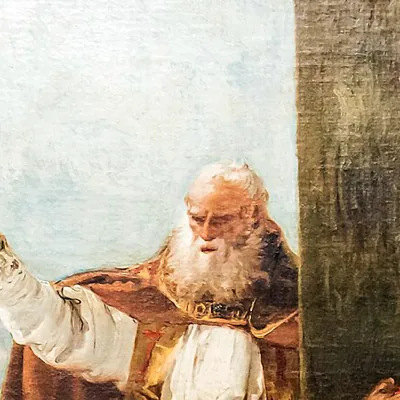
Bishop of Jerusalem at the Council of Nicaea, he received from Constantine the mission of raising the basilica of the Holy Sepulchre over the rediscovered tomb of Christ.
Bishop of Jerusalem around 314, Macarius sat in 325 at the Council of Nicaea, which condemned Arius and recognised in the bishop of Aelia a precedence of honour, under the metropolitan authority of Caesarea (canon 7). He obtained from Constantine that the site of Golgotha, buried beneath a pagan temple since Hadrian, should be cleared.
The excavations brought to light the tomb hewn in the rock; the emperor wrote to Macarius a letter, preserved by Eusebius (Life of Constantine III, 30–32), asking him to build “the most beautiful basilica in the world”. The church of the Resurrection was dedicated in 335, shortly after his death. Tradition, reported by Socrates and Sozomen, attributes to him the identification of the true Cross, found during the works in the presence of the Empress Helena, thanks to the healing of a sick woman.
Celebrated on the same day
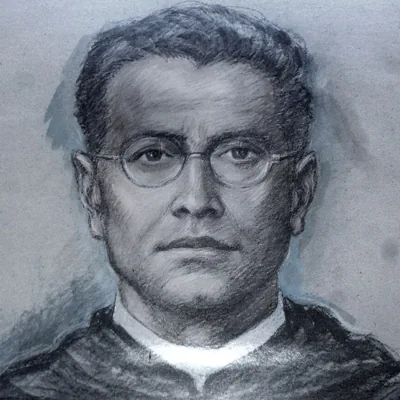
Blessed Elías del Socorro Nieves
The Augustinian parish priest of the Leñero cave
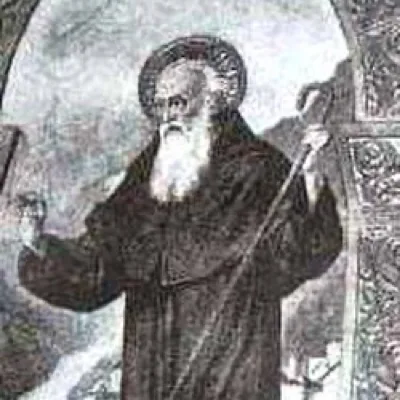
Saint Attalus of Bobbio
Abbot of Bobbio, successor of St Columbanus
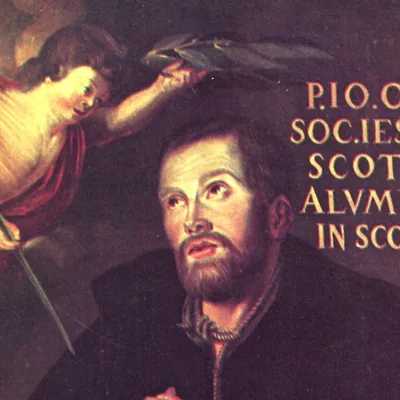
Saint John Ogilvie
Jesuit, martyr of Scotland
Saint Simplicius
Pope at the time of the fall of the Western Empire
Saint Marie-Eugénie of Jesus
Foundress of the Religious of the Assumption
In the same region
Jesus Christ
The Holy of Holies, the Word made flesh
The Fifty Martyrs of Eleutheropolis
Soldiers of Gaza, martyrs of the Arab conquest
The Franciscan Martyrs of Jerusalem
Friars of the Custody of the Holy Land, martyrs in 1391