
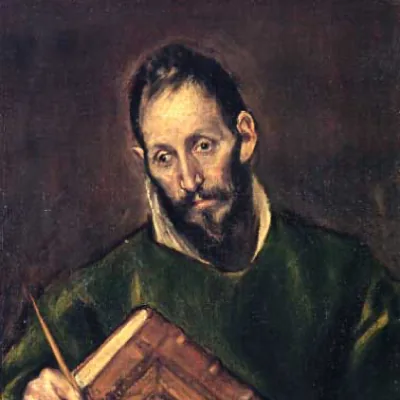
A physician of Antioch, travelling companion of Saint Paul, author of the third Gospel and of the Acts of the Apostles, which he composed after “investigating everything carefully from the very first”.
According to Eusebius of Caesarea (Ecclesiastical History III, 4), Luke came from Antioch in Syria. Paul calls him “Luke the beloved physician” (Colossians 4:14) and counts him among his fellow workers (Philemon 24); in his last captivity he writes: “Luke alone is with me” (2 Timothy 4:11). The passages of Acts written in the first person plural show him at the Apostle’s side from Troas to Philippi, then from Philippi to Jerusalem, where they met James and the elders (Acts 21:17–18).
During the two years of Paul’s detention at Caesarea Maritima (Acts 24:27), Luke remained in the Holy Land, before accompanying him on the ship that took him to Rome (Acts 27–28). The prologue of his Gospel says that he gathered the testimony of “those who from the beginning were eyewitnesses”: his account, which begins and ends in the Temple of Jerusalem, is the only one to report the Annunciation, the Visitation, the Nativity at Bethlehem, the parables of the prodigal son and the good Samaritan, and the appearance at Emmaus.
An ancient prologue to the Gospel says he died at the age of eighty-four in Boeotia, unmarried. His relics were transferred in 357 to the church of the Holy Apostles at Constantinople; Padua venerates his body in the basilica of Santa Giustina. A tradition attested in the sixth century makes him the first painter of icons of the Virgin, hence his patronage of painters. His symbol among the evangelists is the ox.
Celebrated on the same day
Saint Monon
Hermit of the Ardennes, martyr
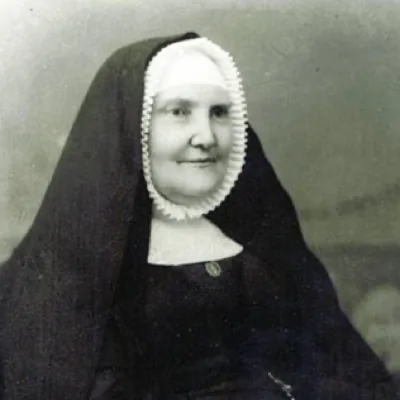
Venerable Mary Jane Wilson
“The Good Mother” of Madeira
In the same region
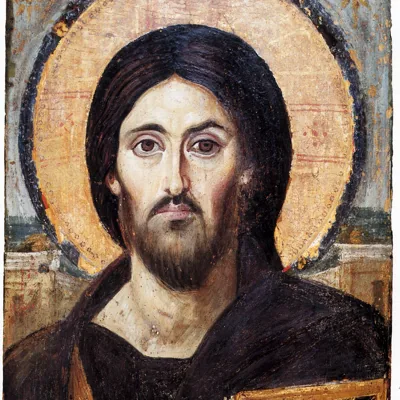
Jesus Christ
The Holy of Holies, the Word made flesh
The Fifty Martyrs of Eleutheropolis
Soldiers of Gaza, martyrs of the Arab conquest
The Franciscan Martyrs of Jerusalem
Friars of the Custody of the Holy Land, martyrs in 1391