
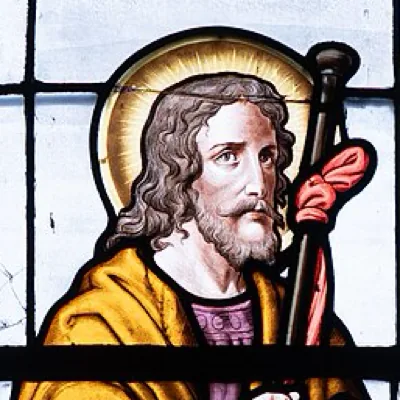
The son of a Breton king of Domnonée, he renounced the crown and lived as a priest and hermit in Ponthieu, at the place that became Saint-Josse-sur-Mer.
The son of Juthael, king of Domnonée, and brother of King Judicael, Judoc (Josse in French) refused, according to tradition, to succeed his brother and left Brittany with pilgrims bound for Rome. Welcomed on the banks of the Authie by Haymon, lord of Ponthieu, he was ordained priest and became his chaplain, then withdrew to live as a hermit, first on the bank of the Authie, then near the Canche. The account is set in the time of King Dagobert; his Breton name, Judoc, is said to mean “chief” or “lord”.
After a pilgrimage to Rome he settled on a height near the sea, where he is said to have built two oratories dedicated to Saint Peter and Saint Paul. He died there around 668, according to the Roman Martyrology, and was buried there. His Life, written later, abounds in miracles: the bread shared with a beggar who was Christ, the springs that gushed forth beneath his staff. An abbey rose over his tomb; Charlemagne entrusted it to Alcuin, who made it a hospice for travellers crossing the Channel.
Monks fleeing the Northmen at the beginning of the tenth century took part of his relics to Winchester, and his cult spread to England, the Netherlands, Germany and as far as Scandinavia; his name gave rise to the given names Joos, Jost and Joyce. The “shroud of Saint Judoc”, an oriental silk of the tenth century that wrapped his bones, is now in the Louvre. His relics are still venerated in the church of Saint-Josse, where a pilgrimage takes place every year.
Celebrated on the same day
Blessed John Marinoni
Theatine, companion of Saint Cajetan in Naples
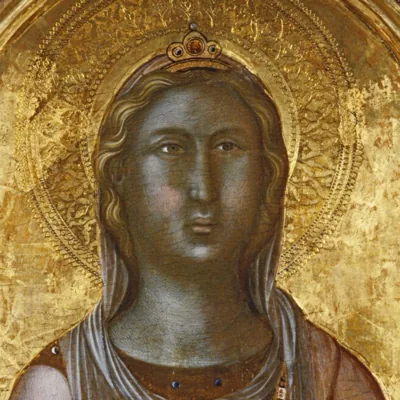
Saint Lucy
Virgin and martyr of Syracuse
Saint Odile
Patroness of Alsace
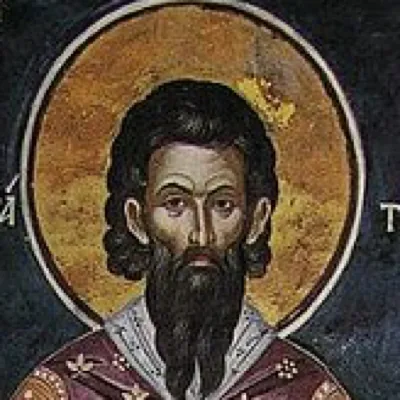
Saints Eustratius, Auxentius, Eugenius, Mardarius and Orestes
Martyrs of Armenia
In the same region
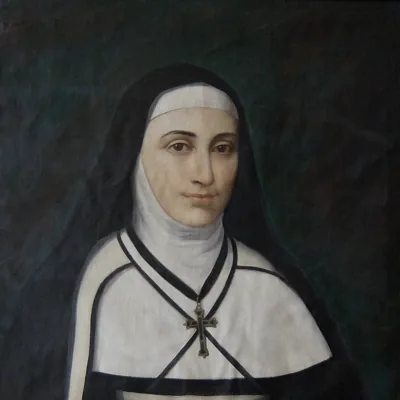
Blessed Adèle de Batz de Trenquelléon
Foundress of the Daughters of Mary Immaculate
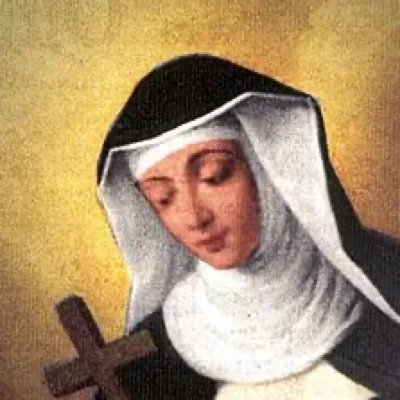
Blessed Agnes of Langeac
Dominican mystic of the Velay
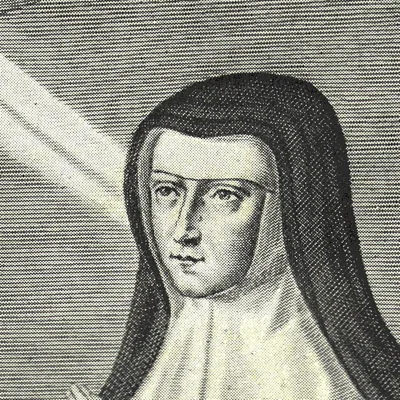
Blessed Alix Le Clerc
Foundress of the Congregation of Notre Dame