
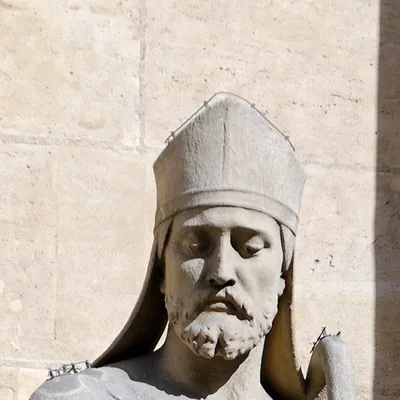
Bishop of Amiens in the sixth century, little known to history, he became through his medieval cult the patron of bakers, and the rue Saint-Honoré in Paris bears his name.
What is known of Honoratus comes mainly from a Life composed at the end of the eleventh century by a canon of Amiens, from older legendaries. Born at Port-le-Grand, in Ponthieu, at the beginning of the sixth century, he was said to have been trained by Bishop Beatus of Amiens, whom he succeeded in spite of himself. Tradition relates that on the announcement of his election, his nurse, who was baking bread, refused to believe it until her baker’s peel bore leaves; planted in the ground, the peel is said to have turned green again and flowered.
Bishop of Amiens for many years, he found, according to tradition, the bodies of the martyrs Fuscian, Victoricus and Gentian, hidden for three centuries. He died around 600, on 16 May according to tradition, and was buried in his native village, where a church soon rose over his tomb. His relics, sheltered at Amiens at the time of the Norman invasions, were raised in 1060; they were afterwards carried in procession against drought and for the harvests.
His cult spread to Paris, where in 1202 a baker gave a plot of land to build a chapel in his honour; it gave its name to the rue and faubourg Saint-Honoré. The Parisian bakers established their confraternity there, and the saint became the patron of bakers and pastry-cooks; in 1659 Louis XIV even ordered all bakers to keep his feast as a holiday. A famous cake bears his name. The south portal of Amiens Cathedral, known as that of the Golden Virgin, illustrates his life.
Celebrated on the same day
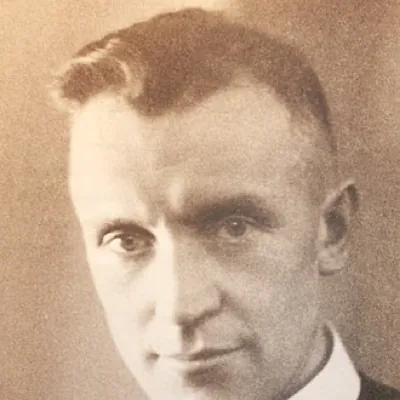
Blessed Vitaliy Bairak
Basilian hegumen of Drohobych, martyr
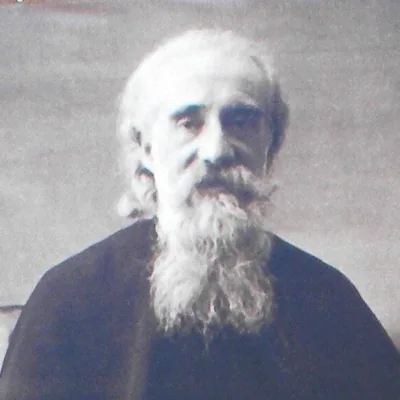
Blessed Vladimir Ghika
Prince, priest and martyr, “apostolic vagabond”
The Forty-Four Martyrs of Mar Saba
Monks massacred during the invasion of 614
Saint Andrew Bobola
Jesuit, apostle of Polesia, martyr
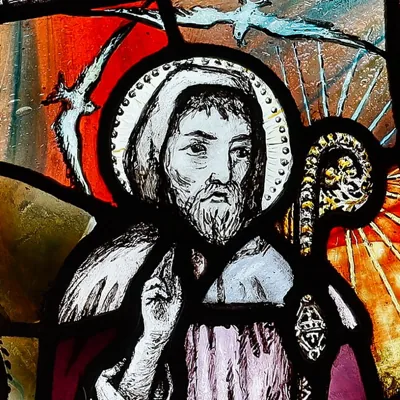
Saint Brendan
Abbot of Clonfert, “the Navigator”
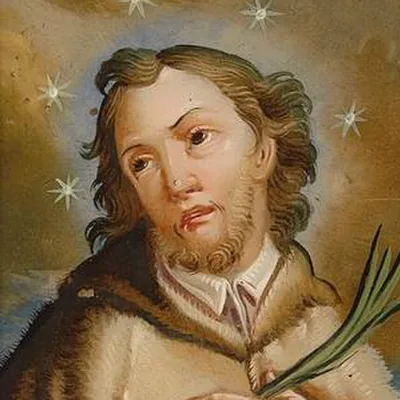
Saint John of Nepomuk
Martyr of the seal of confession
Saint Peregrinus of Auxerre
First Bishop of Auxerre, martyr
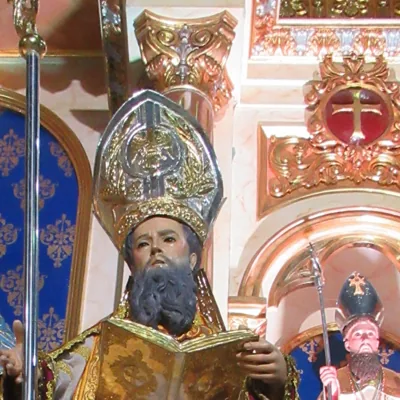
Saint Possidius of Calama
Bishop, biographer of Saint Augustine
Saint Simon Stock
Prior general of the Carmelites
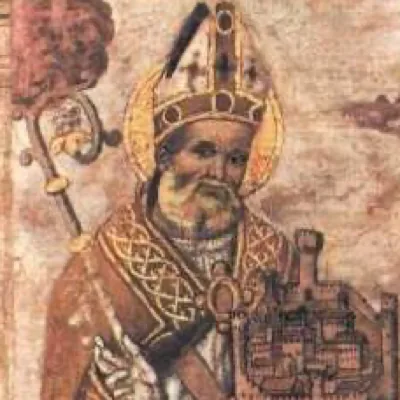
Saint Ubaldus of Gubbio
Bishop of Gubbio
In the same region
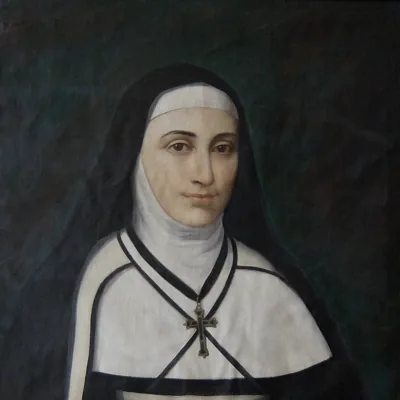
Blessed Adèle de Batz de Trenquelléon
Foundress of the Daughters of Mary Immaculate
Blessed Agnes of Langeac
Dominican mystic of the Velay
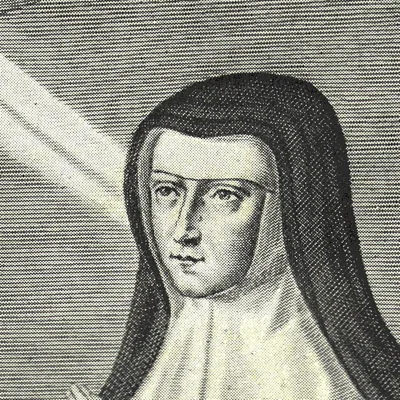
Blessed Alix Le Clerc
Foundress of the Congregation of Notre Dame