
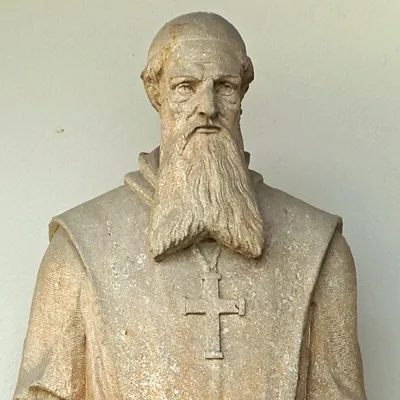
Wendelin Pfanner
Servant of God Franz Pfanner
Trappist abbot, founder of Mariannhill, ‘apostle of the Zulus’
An Austrian Trappist, he founded the abbey of Mariannhill near Durban, opened schools, workshops and hospitals to Africans without distinction of race and gave rise to two missionary congregations.
Born on 21 September 1825 at Langen, near Bregenz, in Vorarlberg, Wendelin Pfanner was ordained priest in 1850 and served the parish of Haselstauden. In 1863, he entered the Trappists of Mariawald, in the Rhineland, where he made profession the following year under the name of Franz. A tireless builder, he restored for Pius IX the abbey of Tre Fontane in Rome, then founded in 1869 the monastery of Mariastern, near Banja Luka, in Bosnia, of which he became prior.
When Bishop James Ricards, of the Eastern Cape, came to ask the Trappists for monks, Pfanner replied: ‘If nobody goes, I shall go!’ He landed in 1880 with some thirty monks. After the failure of Dunbrody, they settled in 1882 in Natal, near Pinetown, and founded Mariannhill, which became one of the largest monasteries in the world; Pfanner was its first abbot in 1885 and founded in the same year the Missionary Sisters of the Precious Blood. Around the abbey and its missions there arose schools open to all children, whatever their colour, workshops where Africans learned a trade, and hospitals.
His missionary methods clashed with the Trappist rule: suspended after a canonical visitation, he resigned his office in 1892 and spent his last years withdrawn at the mission of Emaus, near Umzimkulu. In 1909, the Holy See separated Mariannhill from the Trappist order, the origin of the Mariannhill Missionaries; Pfanner died at Emaus on 24 May of the same year. Rome authorised the opening of his cause in 2003, and Emaus remains a place of pilgrimage for the Catholics of KwaZulu-Natal.
If nobody goes, I shall go!
Celebrated on the same day
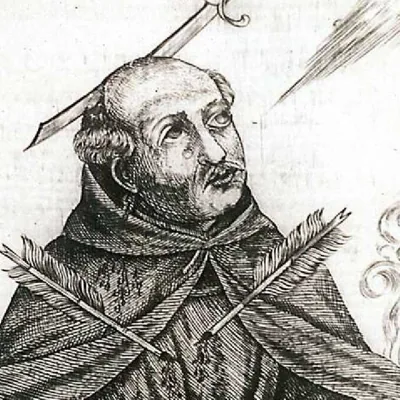
Blessed John de Prado
Franciscan, martyr of Morocco
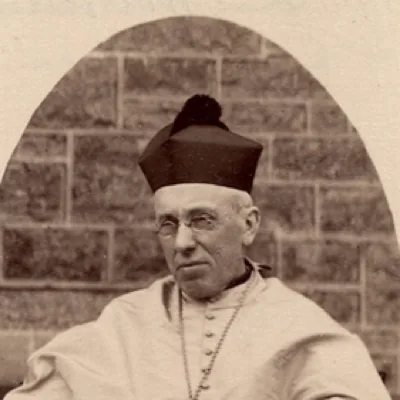
Blessed Louis-Zéphirin Moreau
Bishop of Saint-Hyacinthe
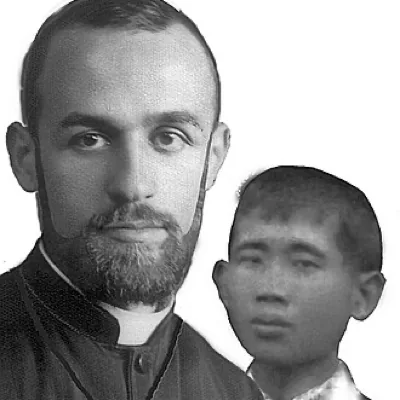
Blessed Mario Vergara and Isidore Ngei Ko Lat
Martyrs of Burma
Saint Simeon Stylites the Younger
Stylite of the Wondrous Mountain
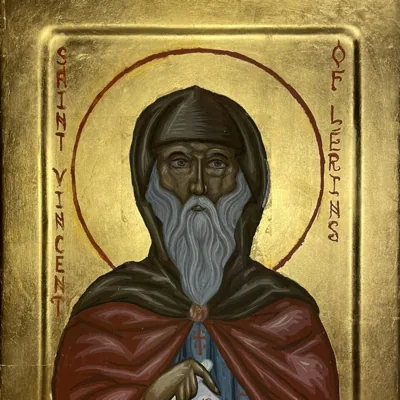
Saint Vincent of Lérins
Monk and theologian of Tradition
Saints Donatian and Rogatian
The ‘Children of Nantes’, martyrs
Holy Thirty-Eight Martyrs of Philippopolis
Martyrs of Thrace under Diocletian
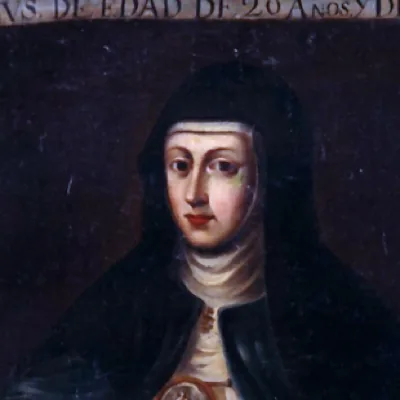
Venerable Mary of Ágreda
Abbess, author of The Mystical City of God