
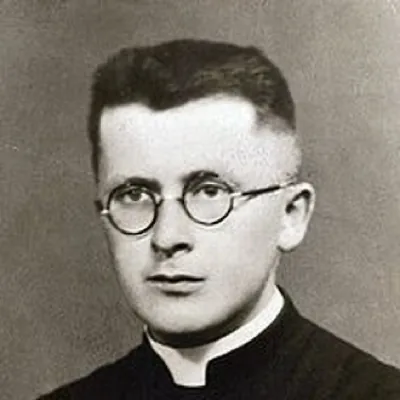
A young priest of the diocese of Trieste, chaplain of an Istrian village, he was abducted and killed in 1946 by Yugoslav militiamen, and his body thrown into a foiba.
Born on 7 September 1912 at Piran, in Istria, then in the Austro-Hungarian Empire and the diocese of Trieste, Francesco Bonifacio studied at the seminary of Koper (Capodistria) and then theology at Gorizia, where he was ordained priest in 1936. Curate at Cittanova d’Istria, in 1939 he was appointed chaplain of Villa Gardossi (Krasica), near Buie, where he founded Catholic Action, a choir, a theatre troupe and a small library, and visited the sick and the poor.
After the war, Istria came under Yugoslav occupation and Italian-speaking priests became suspect. On 11 September 1946, returning home, he was arrested by people’s guards, beaten and stabbed to death, then thrown into a foiba near Grisignana; his body has never been found.
Recognised as a martyr in hatred of the faith, he was beatified on 4 October 2008 in the cathedral of San Giusto in Trieste. The places of his life, now divided between Slovenia and Croatia, then came under the Church of Trieste, which keeps his memory.
Whoever does not have the courage to die for his faith is unworthy to profess it.
Celebrated on the same day
Blessed Gaspar Koteda and Companions
Three young martyrs of the day after the great martyrdom
Saint Deiniol
First Bishop of Bangor
Saint Elias the Spelaiote
Hermit of the caves of Calabria
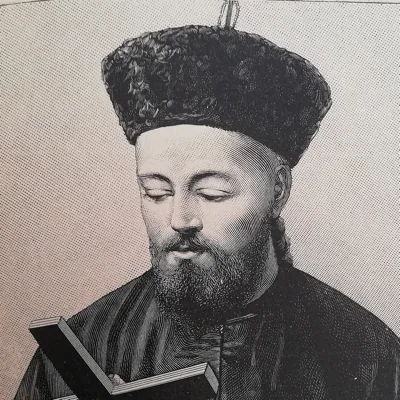
Saint John Gabriel Perboyre
Vincentian, martyr of Wuchang
Saint Paphnutius
Bishop in Upper Thebaid, confessor of the faith
Saint Patiens of Lyon
Bishop of Lyon, nourisher of the starving
Saint Theodora of Alexandria
Penitent in a monk’s habit
Saints Felix and Regula
Martyrs, patrons of Zurich
In the same region
Blessed Angelina of Marsciano
Foundress of the Franciscan Sisters of the Third Order Regular
Blessed Anna Rosa Gattorno
Widow, foundress of the Daughters of St Anne
Blessed Anna Maria Taigi
Mother of a family and Roman mystic