
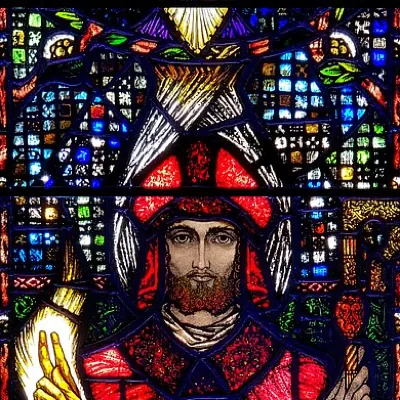
A hermit of Gougane Barra and then founder of the monastery around which the city of Cork grew up, he is the patron of the city and of its diocese.
The son of Amergin, a craftsman, Finbarr grew up near Bandon under the name of Lóchán. According to his Life, at his tonsure he received the name of Findbarr, ‘fair head’, when the cleric who tonsured him exclaimed: ‘Fair is the hair of Lóchán!’ Trained in Ossory, he is said to have made the pilgrimage to Rome and visited Saint David in Wales on the way back.
He first lived as a hermit on a small island in the lake then called Loch Irce, in the mountains of west County Cork, now Gougane Barra, which remains a place of pilgrimage. After founding several churches, he settled in the marsh of Corcach Mór, near the mouth of the Lee: around his monastery, built on a limestone cliff overlooking the river, there developed a renowned school and the city of Cork. The Irish motto of University College Cork, ‘Ionad Bairre Sgoil na Mumhan’, still celebrates ‘the foundation of Barra, school of Munster’.
He died at Cell na Cluaine, on his return from a visit to Gougane Barra, around 623 according to tradition — the Roman Martyrology places him in the sixth century — and was buried in his church at Cork. On its site now stands the Anglican cathedral of Saint Fin Barre; the neighbouring Catholic church is also dedicated to him. In Scotland, the island of Barra and its church Cille Bharra bear a name which tradition connects with him.
Celebrated on the same day
Blessed Juan Elías Medina and Companions
One hundred and twenty-seven martyrs of the Diocese of Córdoba
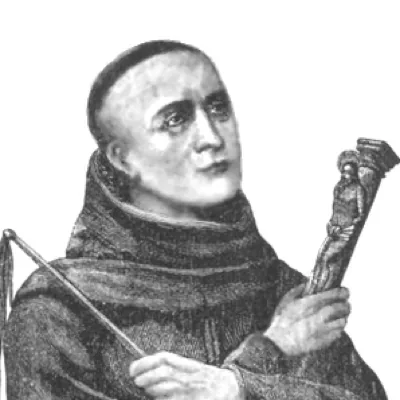
Blessed Ladislaus of Gielniów
Bernardine, poet and patron of Warsaw
Blessed Marcos Criado
Trinitarian, martyr of the Alpujarras
Saint Cadoc
Abbot of Llancarfan
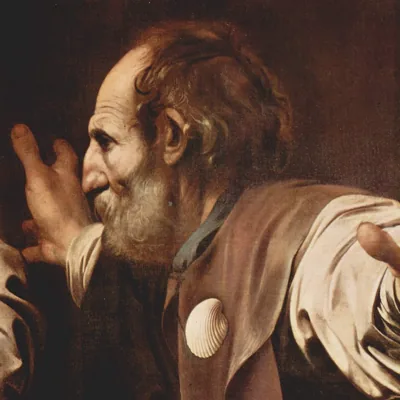
Saint Cleopas
Disciple of Emmaus
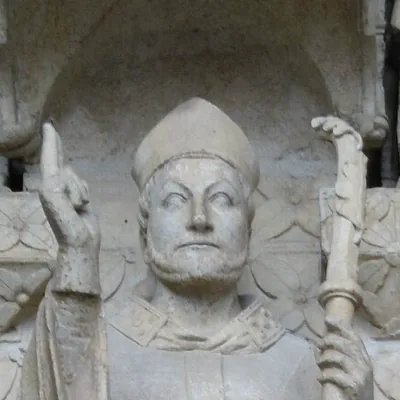
Saint Firmin of Amiens
First bishop of Amiens, martyr
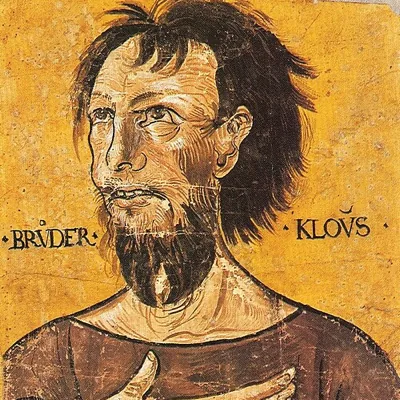
Saint Nicholas of Flüe
Hermit of the Ranft, patron of Switzerland
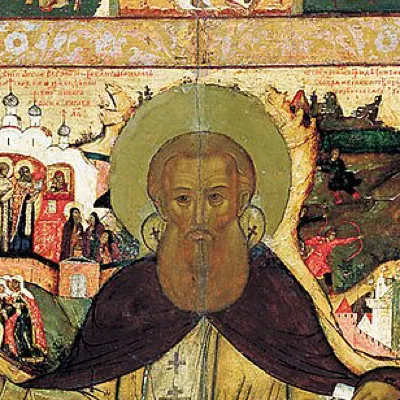
Saint Sergius of Radonezh
Hegumen of the Trinity, father of Russian monasticism
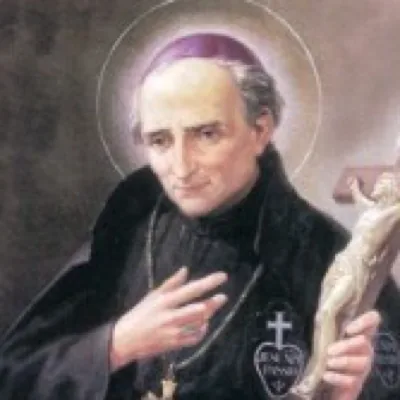
Saint Vincent Maria Strambi
Passionist, Bishop of Macerata and Tolentino
In the same region
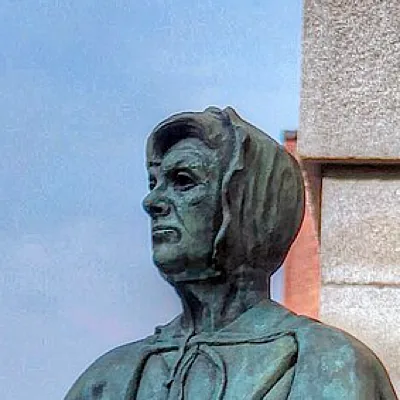
Blessed Margaret Ball
Former Lady Mayoress of Dublin, who died in prison
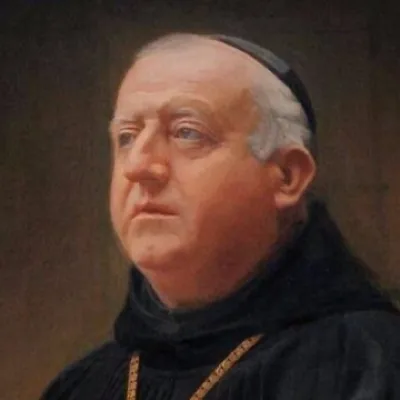
Blessed Columba Marmion
Abbot of Maredsous, spiritual master
Blessed Dermot O’Hurley
Archbishop of Cashel, martyr