
Favourite disciple of Saint Columbanus and his successor at the head of Luxeuil, he made the abbey a nursery of bishops and founders and carried the mission as far as Bavaria.
Born around 560 in Burgundy into an aristocratic family of the region of Langres, Eustasius first served as an officer before entering Luxeuil under Saint Columbanus, who put him at the head of the monastic school. When Columbanus was driven out of Burgundy by King Theuderic II and Queen Brunhild, in 610, he recommended to his monks that they take him as successor. After Theuderic's death, King Chlothar II sent Eustasius to Bobbio, in Italy, to beg Columbanus to return; the old abbot refused but entrusted Luxeuil to the king's protection.
Under his government, which the Roman Martyrology sums up by calling him "father of six hundred monks", Luxeuil received the generosity of Chlothar II and shone throughout Gaul: from its school came bishops and founders such as Saint Audomar (Omer), Saint Acharius, Saint Amandus and Saint Romaric. Eustasius himself preached among the Warasci, in the Doubs valley, and as far as Bavaria. Around 626, at the Council of Mâcon, he defended Columbanus's rule against the attacks of a former monk of Luxeuil, Agrestius.
Around 625 he is said to have founded a monastery on the island of Herrenchiemsee, in Bavaria. Tradition also attributes to him the healing of the young Sadalberga, blind, daughter of Duke Gundoin, who later founded a monastery at Laon. He died at Luxeuil in 629, on 29 March according to tradition, and was succeeded by Saint Waldebert. His relics were transferred around the year 1000 to the abbey of Vergaville, in Lorraine; a Benedictine abbey in the Landes, at Eyres-Moncube, now bears his name and preserves relics.
Celebrated on the same day
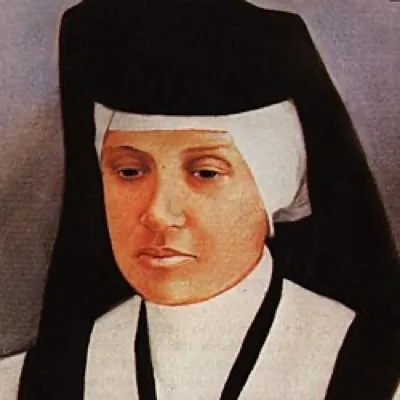
Blessed María de San José
Mother of the poor of Maracay
Blessed Mykola Charnetsky
Exarch of Volhynia, bishop and martyr
Saint Apphianus
Student, martyr at Caesarea
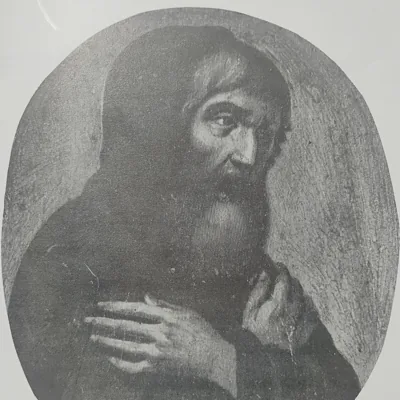
Saint Francis of Paola
Hermit, founder of the Minims
Saint John Payne
Priest and martyr of Chelmsford
Saint Nicetius of Lyon
Bishop of Lyon
Saint Pedro Calungsod
Catechist and martyr of Guam
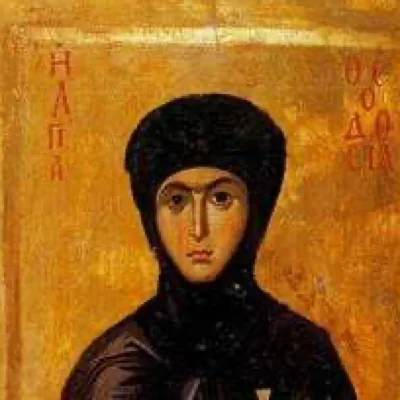
Sainte Théodosie de Tyr
Vierge, martyre à Césarée
In the same region
Blessed Adèle de Batz de Trenquelléon
Foundress of the Daughters of Mary Immaculate
Blessed Agnes of Langeac
Dominican mystic of the Velay
Blessed Alix Le Clerc
Foundress of the Congregation of Notre Dame