
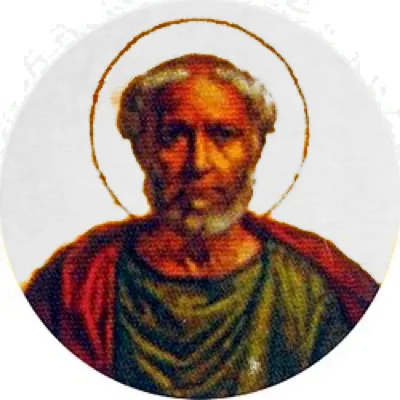
Pope after a bloody election, he defended the faith of Nicaea, entrusted to Saint Jerome the revision of the Latin Bible and adorned the tombs of the martyrs of the catacombs with his verse epigrams.
Son of Antonius, a priest of Hispanic origin attached to the church of Saint Lawrence, Damasus grew up in Rome and became a deacon under Pope Liberius. At the death of the latter, in 366, one part of the clergy elected the deacon Ursinus, the other Damasus, who was consecrated on 1 October: the clashes between partisans left a hundred and thirty-seven dead in the basilica of Sicininus, according to the pagan historian Ammianus Marcellinus, and the prefect of Rome finally exiled Ursinus. Accused several times by his adversaries, Damasus was cleared by the Emperor Gratian and by a Roman synod.
He fought Arianism and the errors of Apollinaris and the Pneumatomachi in several synods; in 380 Theodosius’ Edict of Thessalonica made the faith ‘professed by the pontiff Damasus and Peter, Bishop of Alexandria’ the rule of the Empire. He took Saint Jerome as his secretary, and asked him around 382 to revise the Latin translation of the Gospels: this work was the origin of the Vulgate.
He restored the catacombs, searched out the tombs of the martyrs and had his verse epigrams engraved there by the calligrapher Furius Dionysius Filocalus, whose elegant letters can still be read at San Callisto. He died on 11 December 384 and was buried in the small basilica he had built on the Via Ardeatina; his relics were transferred to San Lorenzo in Damaso. Spain, from which his paternal family came, venerates him particularly.
Here, I confess, I, Damasus, wished to lay my remains, but I feared to disturb the holy ashes of the just.
Celebrated on the same day
Blessed Martin Lumbreras and Melchior Sánchez
Augustinian Recollects, martyrs of Nagasaki
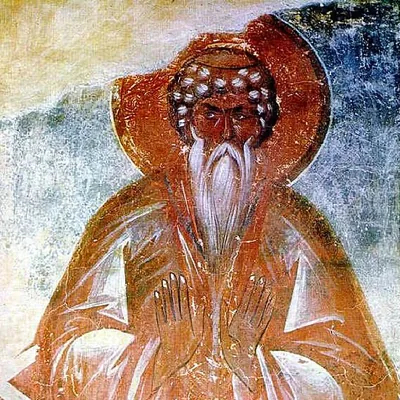
Saint Daniel the Stylite
Stylite of Constantinople
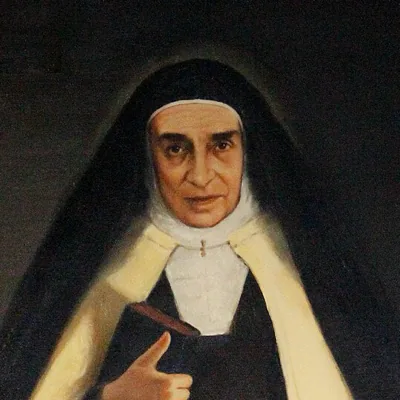
Saint Maravillas of Jesus
Discalced Carmelite, foundress of Carmels
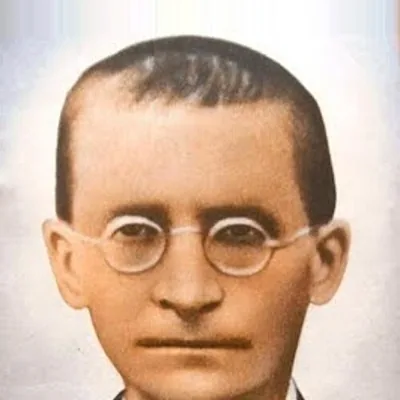
Venerable Rudolf Komorek
The holy priest of São José dos Campos
In the same region
Blessed Angelina of Marsciano
Foundress of the Franciscan Sisters of the Third Order Regular
Blessed Anna Rosa Gattorno
Widow, foundress of the Daughters of St Anne
Blessed Anna Maria Taigi
Mother of a family and Roman mystic