
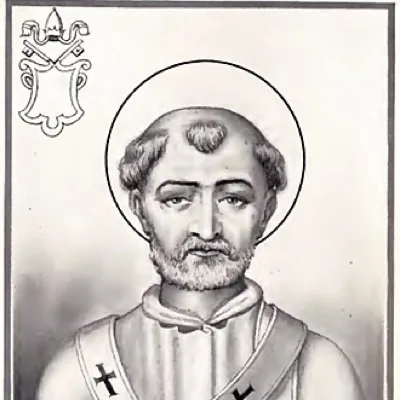
Elected Bishop of Rome in 251 after the persecution of Decius, Cornelius readmitted after penance the Christians who had fallen, against the rigorist schism of Novatian; exiled to Centumcellae, he died there in 253 and is named in the Roman Canon.
After the death of Fabian, the see of Rome remained vacant for more than a year. In the spring of 251 the priest Cornelius was elected, writes Saint Cyprian, by the testimony of almost all the clergy, the vote of the people and the agreement of the bishops (Letter 55). The priest Novatian, a renowned theologian who refused all reconciliation to Christians who had sacrificed during the persecution, then had himself consecrated bishop against him. Supported by Cyprian and by Dionysius of Alexandria, Cornelius gathered at Rome a synod of sixty bishops which condemned Novatian and admitted repentant apostates to penance.
In a letter to Fabius of Antioch preserved by Eusebius (Ecclesiastical History, VI, 43), he describes the Church of Rome: forty-six priests, seven deacons, seven subdeacons, forty-two acolytes, fifty-two exorcists, readers and doorkeepers, and more than fifteen hundred widows and poor people assisted. In 252 persecution resumed under Trebonianus Gallus: Cornelius was exiled to Centumcellae, present-day Civitavecchia, where he died in June 253. Cyprian hails him as a martyr.
His body was brought back to Rome and buried in the crypt of Lucina, in the cemetery of Callistus, beneath a Latin epitaph that calls him a martyr. His name appears in the Roman Canon of the Mass beside that of Cyprian, beheaded at Carthage on 14 September 258; the General Roman Calendar celebrates them together on 16 September. At Carnac, in Brittany, Saint Cornély, the Breton form of his name, is invoked as protector of horned cattle; the abbey of Kornelimünster, near Aachen, preserves relics attributed to him.
Celebrated on the same day
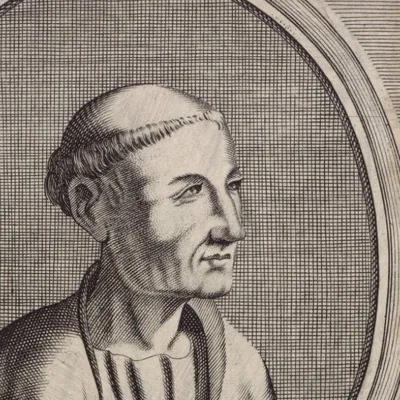
Blessed Louis Aleman
Cardinal, archbishop of Arles
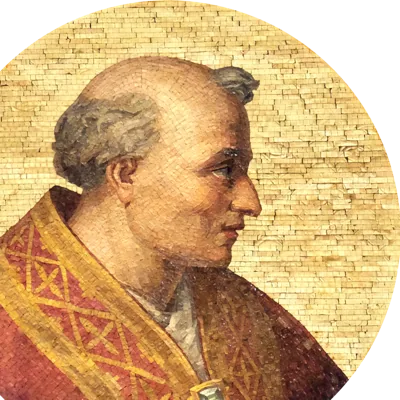
Blessed Victor III
Pope, abbot of Monte Cassino
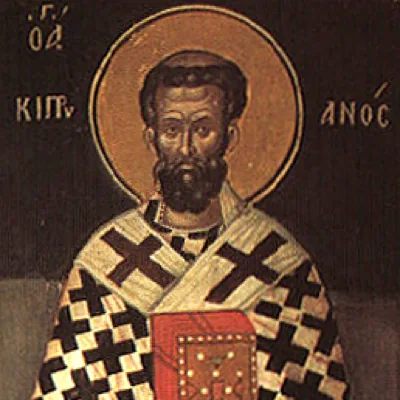
Saint Cyprian of Carthage
Bishop and martyr
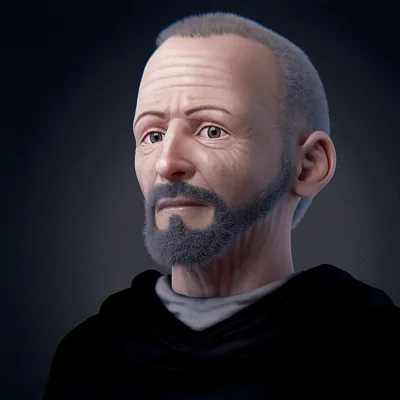
Saint John Macías
The porter of the poor of Lima
Saint Martin of Finojosa
Abbot of Huerta, bishop of Sigüenza
Saint Ninian
Bishop of Whithorn, apostle of the southern Picts
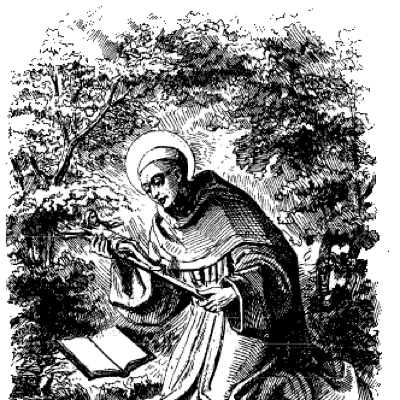
Saint Vitalis of Savigny
Founder of the abbey of Savigny
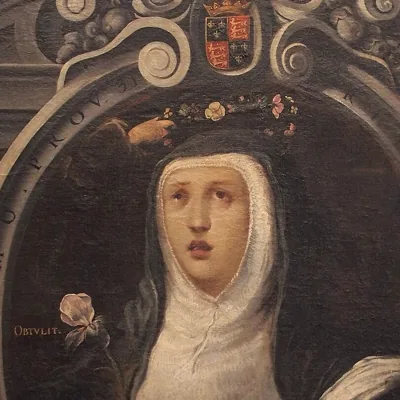
Saint Edith of Wilton
Nun of Wilton
Saint Euphemia of Chalcedon
Virgin and martyr
Saint Ludmila
Duchess of Bohemia, martyr
In the same region
Blessed Angelina of Marsciano
Foundress of the Franciscan Sisters of the Third Order Regular
Blessed Anna Rosa Gattorno
Widow, foundress of the Daughters of St Anne
Blessed Anna Maria Taigi
Mother of a family and Roman mystic