
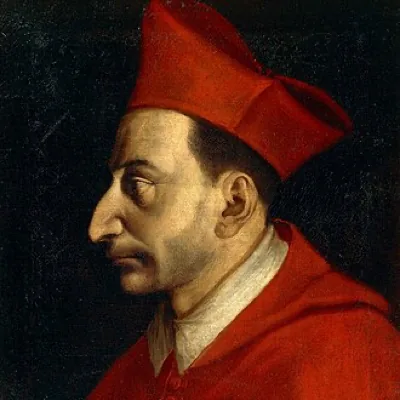
Carolus Borromaeus
Saint Charles Borromeo
Archbishop of Milan, model of pastors of the Catholic Reformation
The nephew of Pius IV, a cardinal at twenty-two, he was one of the architects of the end of the Council of Trent and then the reforming Archbishop of Milan, who remained among his people during the plague of 1576.
Born on 2 October 1538 at the castle of Arona, on Lake Maggiore, Carlo Borromeo was a doctor of law of Pavia when his maternal uncle became pope as Pius IV (1559). Created cardinal and administrator of the diocese of Milan at twenty-two, he directed the Secretariat of State in Rome and played a decisive role in the resumption and conclusion of the Council of Trent (1562–1563), then in the drafting of the Roman Catechism.
The death of his elder brother, in 1562, confirmed him in a radical choice of life: ordained priest in 1563, then bishop, he reached Milan in 1566, the first archbishop to reside there for decades. He held there six provincial councils and eleven synods, founded seminaries, visited the parishes as far as the Swiss valleys, developed the schools of Christian doctrine and reformed the orders. His measures earned him strong opposition: in 1569 a friar of the Humiliati order shot at him during his prayer.
During the plague of 1576–1577 he stayed in Milan, sold his goods to feed the sick and led processions of penance barefoot. Worn out, he died on 3 November 1584, at forty-six. Paul V canonised him as early as 1610. His body rests in the crypt of Milan Cathedral.
Celebrated on the same day
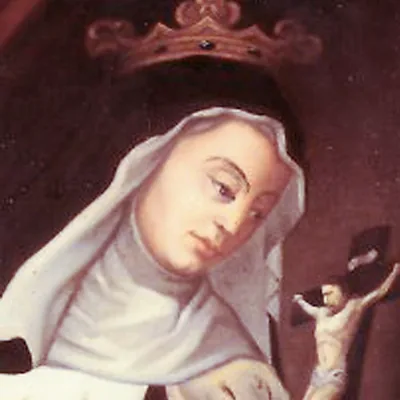
Blessed Frances of Amboise
Duchess of Brittany, Carmelite
Saint Emeric of Hungary
Prince of Hungary
Saint Felix of Valois
Co-founder of the Trinitarians
Saint Pierius of Alexandria
Priest, ‘Origen the Younger’
Saints Vitalis and Agricola
Martyrs of Bologna
In the same region
Blessed Angelina of Marsciano
Foundress of the Franciscan Sisters of the Third Order Regular
Blessed Anna Rosa Gattorno
Widow, foundress of the Daughters of St Anne
Blessed Anna Maria Taigi
Mother of a family and Roman mystic