
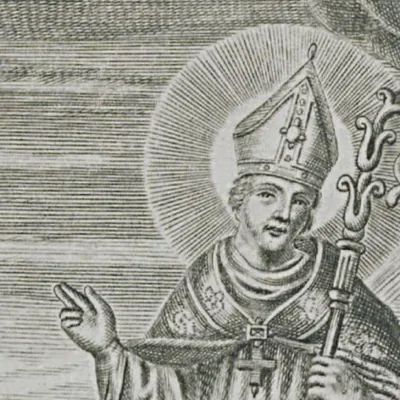
An Aquitanian monk who became a missionary bishop, he evangelised Flanders and Brabant, founded many monasteries, among them Elnone, and died almost a hundred years old.
Born in Lower Poitou around 584 into a noble family, Amand became a monk at twenty on the island of Yeu, despite his father’s opposition. He then stayed at Tours, near the tomb of Saint Martin, and lived for some fifteen years as a recluse at Bourges, under the guidance of Bishop Austregisilus, on bread and water. After a pilgrimage to Rome, he was consecrated bishop around 628, without a fixed see, to proclaim the Gospel to the still pagan populations of northern Gaul, notably at Ghent, where at first he suffered blows and humiliations.
Banished for a time for having reproached King Dagobert for his conduct, he afterwards resumed his missions and founded a network of monasteries which became so many centres of evangelisation: at Ghent, the abbey of Saint Peter and that of Saint Bavo, and above all Elnone, on the Scarpe, around 639. He advised the foundresses of Nivelles and Marchiennes, and pushed his missions as far as the Slavs of the Danube and the Basques. Bishop of Maastricht around 647–649, he left that see after three years to resume the missionary life.
He died aged ninety at Elnone, where he was laid in the tomb in 675 or 676 according to the Roman Martyrology; the abbey, then the town, took his name, Saint-Amand-les-Eaux. His Life, written in the 8th century, fixed his image as ‘apostle of Belgium’: he is greatly venerated in Flanders, Hainaut and northern France, where he is the patron of brewers. Among his disciples are Saint Bavo of Ghent and Saint Humbert of Maroilles. His attribute is the serpent, in memory of a miracle ascribed to him by the Golden Legend.
Celebrated on the same day
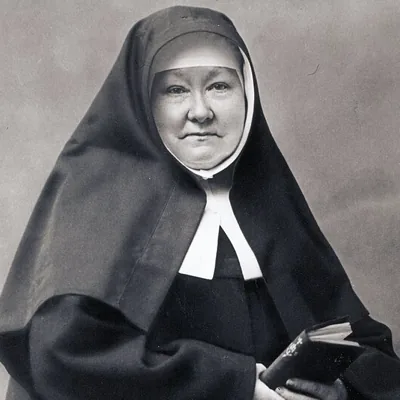
Blessed Maria Theresia Bonzel
Foundress of the Franciscan Sisters of Perpetual Adoration
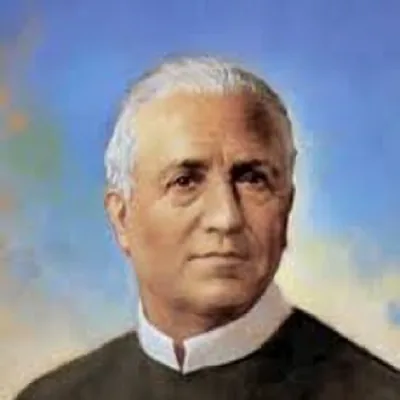
Saint Alfonso Maria Fusco
Founder of the Sisters of Saint John the Baptist
Saint Anthony of Nagasaki
Child martyr, son of a Chinese father and a Japanese mother
Saint Bonaventure of Kyoto
Baptised as a child, brought up in a Buddhist monastery
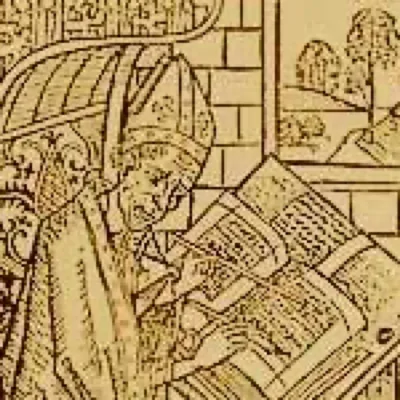
Saint Brynolf Algotsson
Bishop of Skara, liturgist and poet
Saint Cosmas Takeya
Swordsmith, catechist at Osaka
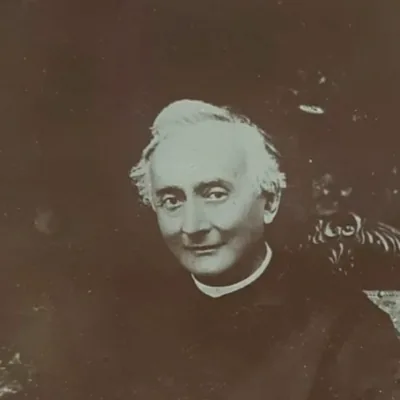
Saint Francesco Spinelli
Founder of the Sisters Adorers of the Blessed Sacrament
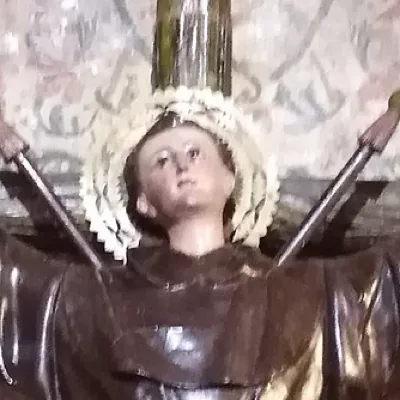
Saint Francis Blanco
Galician Franciscan, martyr of Nagasaki
Saint Francis of Miyako
Physician of the poor, catechist
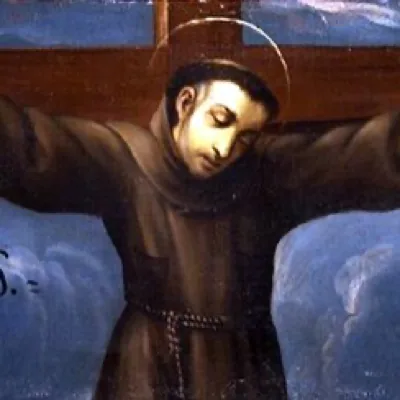
Saint Francis of Saint Michael
Franciscan brother, nurse of lepers
Saint Gabriel of Ise
Catechist at nineteen
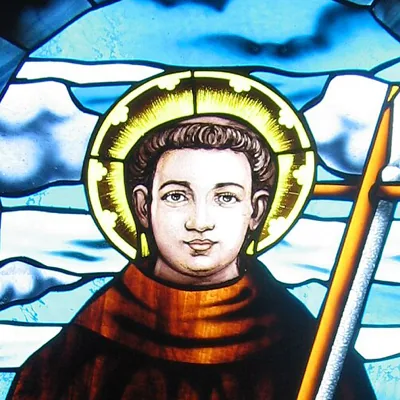
Saint Gonsalo Garcia
Friar Minor of Vasai, martyr of Nagasaki
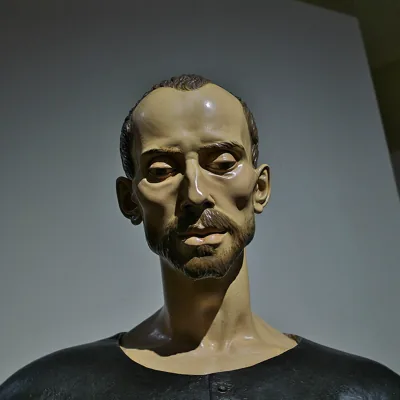
Saint James Kisai
Jesuit brother, porter of the Osaka residence
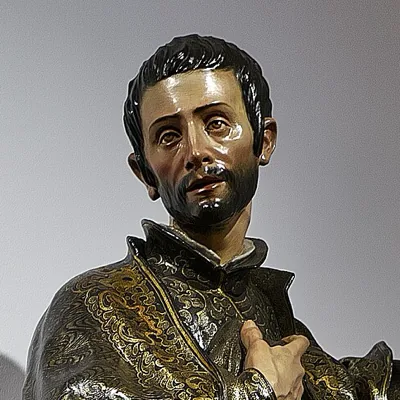
Saint John of Gotō
Catechist and Jesuit novice, martyr at nineteen
Saint John Kinuya
Silk weaver of Kyoto
Saint Joachim Sakakibara
Cook of the Franciscan convent of Osaka
Saint Julian of Emesa
Physician, martyr of Homs
Saint Leo Karasumaru
Former bonze, catechist of the Franciscans of Kyoto
Saint Louis Ibaraki
The youngest of the twenty-six martyrs, crucified at twelve
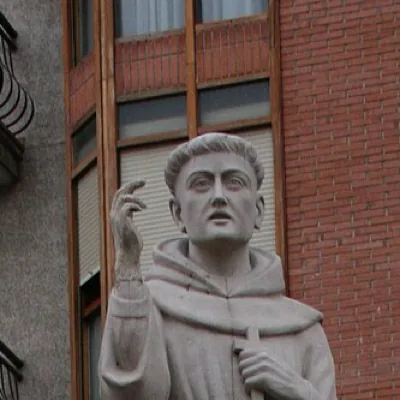
Saint Martin of the Ascension
Basque Franciscan, martyr of Nagasaki
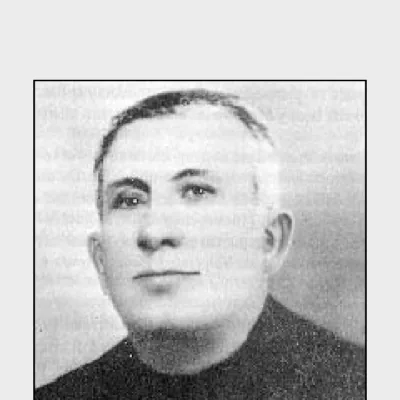
Saint Mateo Correa Magallanes
Martyr of the seal of confession
Saint Michael Kozaki
Carpenter and bow-maker, builder of the Franciscan churches
Saint Paul Ibaraki
Sake brewer, catechist of Kyoto
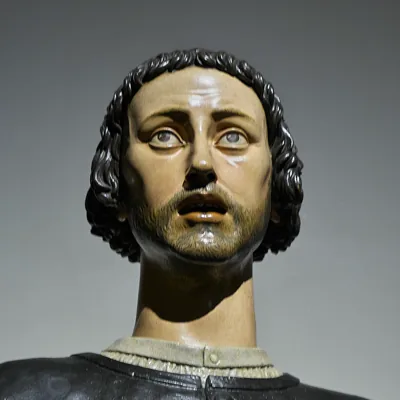
Saint Paul Miki and Companions
Martyrs of Japan
Saint Paul Suzuki
Catechist, head of the hospital of Saint Joseph in Kyoto
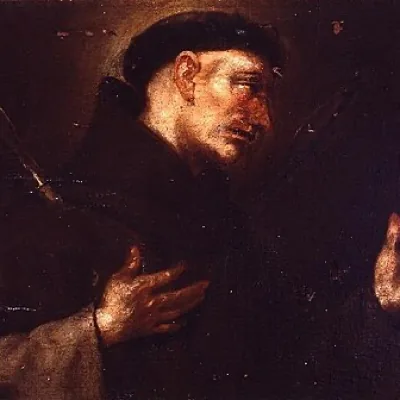
Saint Peter Baptist
Franciscan, ambassador from Manila, leader of the twenty-six martyrs
Saint Thomas Dangi
Apothecary, catechist of Kyoto
Saint Thomas Kozaki
Adolescent martyr, author of a farewell letter to his mother
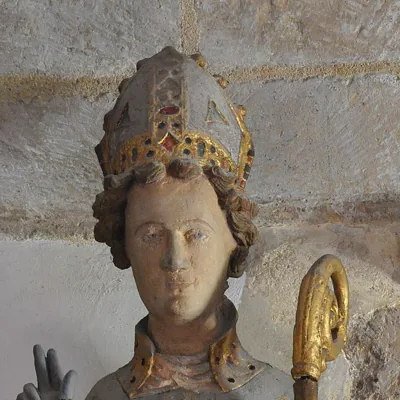
Saint Vedast
Bishop of Arras, catechist of Clovis
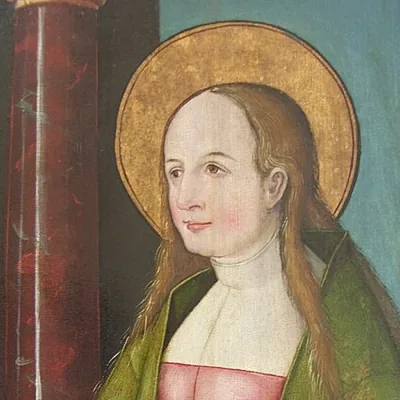
Saint Dorothea and Saint Theophilus
Virgin and martyrs of Caesarea
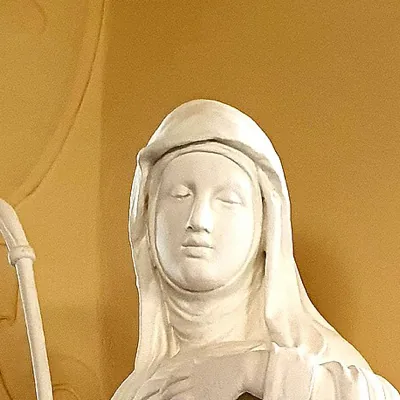
Saints Harlindis and Relindis
Sister abbesses of Aldeneik (Maaseik)
Saints Silvanus of Emesa, Luke and Mocius
Bishop, deacon and lector, martyrs
Venerable Marthe Robin
Mystic of Châteauneuf-de-Galaure, inspirer of the Foyers of Charity
In the same region
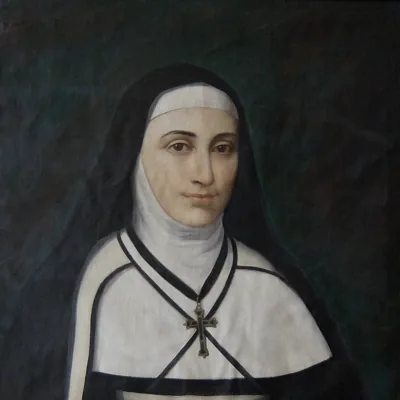
Blessed Adèle de Batz de Trenquelléon
Foundress of the Daughters of Mary Immaculate
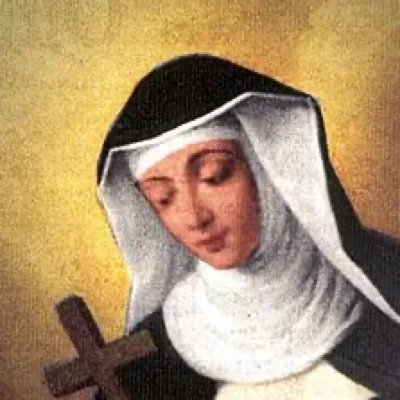
Blessed Agnes of Langeac
Dominican mystic of the Velay
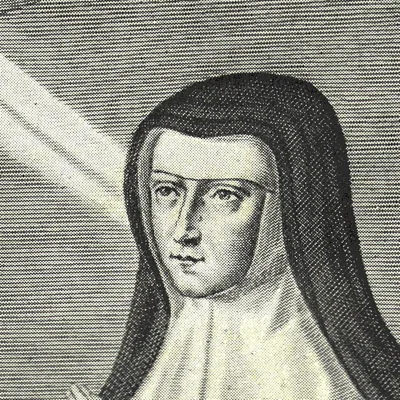
Blessed Alix Le Clerc
Foundress of the Congregation of Notre Dame