
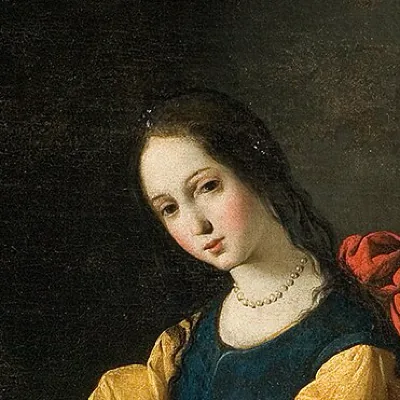
A young consecrated virgin of Catania, martyred under Decius around 251, named in the Roman Canon of the Mass; her veil, carried before the lava flows of Etna, has made her the protectress of Catania against fire.
According to her Passion, written in the 5th century and preserved in Latin and Greek, Agatha belonged to a noble Christian family of Catania and had consecrated herself to God. The governor Quintianus, enamoured of her, had her arrested by virtue of the edict of Decius. Remaining unshaken, she replied that there is no higher nobility than to be a handmaid of Christ. Tortured, she had her breasts torn off; tradition relates that Saint Peter appeared to her in her prison and healed her. Rolled over burning coals, she died in her dungeon on 5 February 251.
Her cult is very ancient: her name appears in the Roman Canon of the Mass, and she is depicted among the virgins in the mosaics of Sant’Apollinare Nuovo at Ravenna. In Rome, Pope Symmachus built a basilica for her on the Via Aurelia and Saint Gregory the Great dedicated to her in 593 the church of Sant’Agata dei Goti. Tradition relates that a year after her death, her veil, set against an eruption of Etna, stopped the lava; it has since been carried in procession before the flows, as late as 1886 at Nicolosi.
Carried off to Constantinople in 1040 by the Byzantine general George Maniakes, her relics were brought back to Catania in 1126 by two soldiers, Gisliberto and Goselmo. They rest in the cathedral, with the silver reliquary bust of 1376. From 3 to 5 February, Catania celebrates one of the greatest religious feasts in Italy: the bust is borne through the city on its carriage, drawn by thousands of devotees dressed in the white ‘sacco’ and preceded by the ‘candelore’ of the guilds. She is also patron of Malta, with Saint Paul and Saint Publius, and of San Marino.
Celebrated on the same day
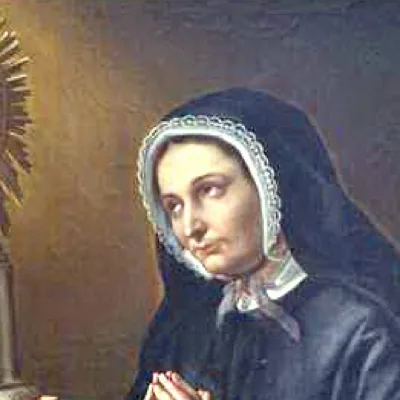
Blessed Elisabetta Canori Mora
Wife and mother, Trinitarian tertiary
Saint Avitus of Vienne
Bishop of Vienne
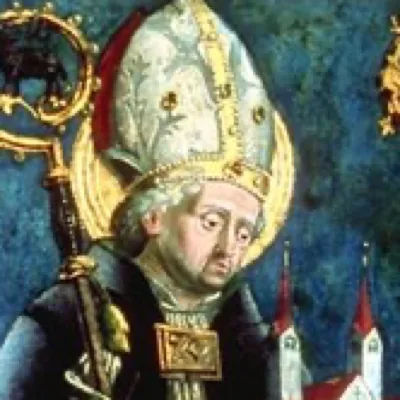
Saint Ingenuinus of Säben
First bishop of Säben, patron of Brixen
Saint Jesús Méndez Montoya
Curate of Valtierrilla
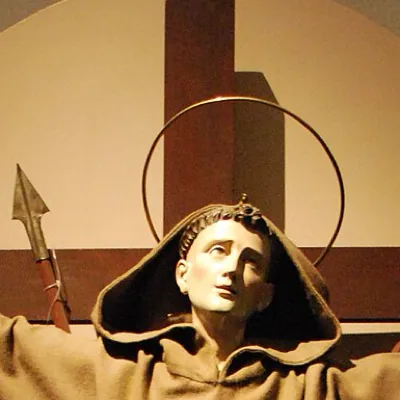
Saint Philip of Jesus
Franciscan, Mexican protomartyr
Saint Sabas the Younger
Italo-Greek monk, promoter of cenobitic life
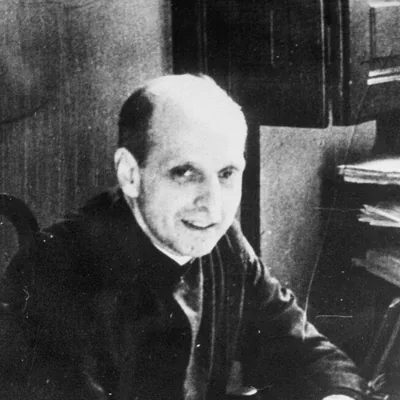
Servant of God Pedro Arrupe
Jesuit, witness of Hiroshima, Superior General of the Society of Jesus
In the same region
Blessed Angelina of Marsciano
Foundress of the Franciscan Sisters of the Third Order Regular
Blessed Anna Rosa Gattorno
Widow, foundress of the Daughters of St Anne
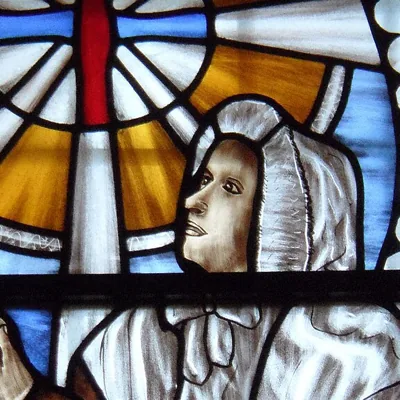
Blessed Anna Maria Taigi
Mother of a family and Roman mystic